The Jakarta Post
Please Update your browser
Your browser is out of date, and may not be compatible with our website. A list of the most popular web browsers can be found below.
Just click on the icons to get to the download page.


Popular Reads
Top Results
No results found. Please check your search term and try again
Can't find what you're looking for?
View all search results
Popular Reads
Top Results
No results found. Please check your search term and try again
Can't find what you're looking for?
View all search resultsexport
Academia 3 months ago
PREMIUM
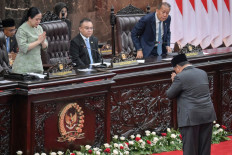
Developmental state ambition: Reading Prabowo’s economic direction
President Prabowo’s visionary fiscal address signals a bold shift toward a state-driven, developmental state model aimed at unleashing Indonesia’s economic potential—but its ultimate success hinges entirely on dismantling the entrenched governance and bureaucratic failures of the past.
Editorial 3 months ago
PREMIUM
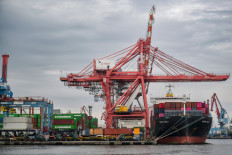
Gain some, lose more
The idea of centralizing export control for certain natural resources in a single institution is not new, and the failed experiment of such an agency for cloves serves as a case study on why not to pursue that course again, especially for major commodities like coal, CPO and ferroalloys.

Companies 3 months ago
PREMIUM
Indonesia pushes into global fertilizer market but must up its game
Australia, India and several other countries are seeking Indonesian fertilizer supplies as geopolitical tensions disrupt global markets, but industry players say long-term competitiveness will depend on technology and workforce upgrades.
Opinion 3 months ago
PREMIUM
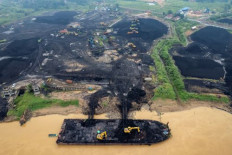
Analysis: Resource export monopoly: Prabowo’s risky solution to under-invoicing
President Prabowo Subianto recently delivered a striking announcement: his administration plans to gradually place exports of Indonesia’s natural resources under state control to combat alleged under-invoicing by resource exporters. While the proposal could help address persistent under-invoicing, it has also raised concerns among businesses and economists, who warn that it risks becoming a misguided solution that opens the door to rent-seeking and ultimately harms the economy and public welfare.


Academia 3 months ago
PREMIUM
Risky reawakening of state-controlled commodity exports
it remains to be seen whether President Prabowo’s ambitious "single window" export policy will turn Indonesia into a global price maker, or will tight state centralization trigger a historic crisis of market trust.
Editor's Picks
Popular
- Much ado about asset forfeiture
- Mass poisonings cast doubt on free meals reforms
- New data rules could unlock cross-border data flows
- Children are no longer the priority, were they ever?
- Three more volcanoes erupt following Sinabung, Anak Krakatau
- Indonesia, Hong Kong to host new 14-team FIFA ASEAN Cup
- Rescuers searching for 140 people from passenger ship in Java Sea
- Haze drives surge in respiratory illnesses in Indonesia
- Trump says he would be OK with China building cars in US
- Assessing the merit of the strategic commodities bill


