The Jakarta Post
Please Update your browser
Your browser is out of date, and may not be compatible with our website. A list of the most popular web browsers can be found below.
Just click on the icons to get to the download page.


Popular Reads
Top Results
No results found. Please check your search term and try again
Can't find what you're looking for?
View all search results
Popular Reads
Top Results
No results found. Please check your search term and try again
Can't find what you're looking for?
View all search resultsextinction



Science & Tech 5 years ago
Dinosaurs declined before meteor strike: study
The Chicxulub meteor, which slammed into what is now Mexico's Yucatan peninsula around 66 million years ago, is thought to have led to the Cretaceous-Paleogene extinction event that killed off three quarters of life on Earth -- dinosaurs included.


National 5 years ago
Rare Javan rhino calves caught on video in Ujung Kulon
A female calf, likely between 3 and 5 months old, and a male calf, whose age was estimated at around 1 year old, were separately spotted on camera traps in the Ujung Kulon National Park on the western tip of Java Island, according to the ministry.

Science & Tech 5 years ago
No threat to Earth as huge asteroid zooms past
The asteroid was two million kilometres (1.25 million miles) away at its nearest, according to NASA -- more than five times the distance between the Earth and the Moon but still close enough to be classified as a "potentially hazardous asteroid".
Science & Tech 5 years ago
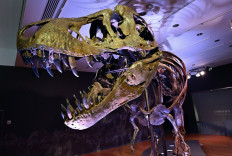
Comet from edge of solar system killed the dinosaurs: study
A pair of astronomers at Harvard say they have now resolved long standing mysteries surrounding the nature and origin of the "Chicxulub impactor", a huge celestial object that triggered a catastrophic "impact winter" that eventually wiped out three-quarters of life on Earth



Editor's Picks
Popular
- Much ado about asset forfeiture
- Mass poisonings cast doubt on free meals reforms
- Indonesia, China eye cooperation to boost 3 million homes program
- Prabowo sacks Purbaya, turns to familiar hand at Finance Ministry
- Children are no longer the priority, were they ever?
- The benefit of the doubt has expired
- Australian woman dies after falling from cliff at Bali’s Kelingking Beach
- Wildfire breaks out again at Mount Bromo
- Purbaya says he was 'upset', but half expected removal
- Suahasil seen to prioritize fiscal discipline, continuity


