The Jakarta Post
Please Update your browser
Your browser is out of date, and may not be compatible with our website. A list of the most popular web browsers can be found below.
Just click on the icons to get to the download page.


Popular Reads
Top Results
No results found. Please check your search term and try again
Can't find what you're looking for?
View all search results
Popular Reads
Top Results
No results found. Please check your search term and try again
Can't find what you're looking for?
View all search resultsmilitary
Academia 3 months ago
PREMIUM
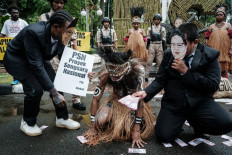
What’s next after ‘Pesta Babi’ breaks the silence
By holding up an uncomfortable mirror to state-led exploitation and violence in Papua, Pesta Babi has shattered decades of enforced silence, forcing Jakarta to choose between repressive censorship and genuine, rights-respecting reform.
Academia 3 months ago
PREMIUM
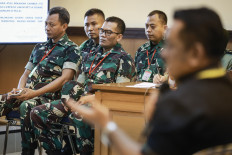
A test of legal certainty: Prabowo's impasse over the Andrie case
As President Prabowo finds himself in an international spotlight over a brutal chemical attack on a human rights defender, a landmark pretrial ruling has exposed a deep systemic clash between civilian accountability and entrenched military impunity.

Opinion 3 months ago
PREMIUM
Analysis: Military budget swells as roles expand to civilians
Strengthening national defense has long been a priority for President Prabowo Subianto and dates back to his tenure as defense minister. There is no doubt about his administration’s focus on defense, given that the country has yet to achieve its 2009-2024 Minimum Essential Force (MEF) target. Yet the public continues to question whether the government’s efforts are genuinely aimed at safeguarding Indonesia’s sovereignty or attempts to extend military authority into civilian domains.


Academia 3 months ago
PREMIUM
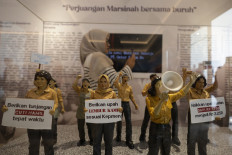
The Streisand effect in military-sponsored censorship of a movie
When Jakarta tried to censor an indigenous Papuan documentary using military force and religious panic, it triggered the ultimate backfire: a digital wildfire exposing the raw reality of state-driven land grab.
Academia 4 months ago
PREMIUM
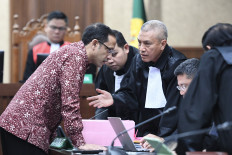
Prosecuting young citizens for loving their nation
From the mass arrest of student protesters to the high-profile prosecution of a former minister, Indonesia’s judicial system is being systematically weaponized to crush dissent and pave the way for an institutionalized autocracy.
Opinion 4 months ago
PREMIUM
Analysis: Draft TNI regulation on funding raises concerns over military neutrality
The financial independence of the Indonesian Military (TNI) has come under scrutiny following a leaked draft of a government regulation on TNI duties, which appears to open the door for funding from sources outside the state budget. The controversy, however, points to a deeper structural issue: Defense spending in Indonesia has long been deprioritized relative to other national priorities such as infrastructure development, energy subsidies, social assistance and food security.
Editor's Picks
Popular
- Popular discontent is justified. Authoritarianism is not the answer
- Govt under pressure as 3 million home drive hits cracks
- Recentralization concerns in fiscal, education heighten
- Safeguarding Indonesia's AI future
- Batam residents protest data centers amid water crisis
- Canals full, roads submerged as Bangkok declares flood disaster
- Japan schoolboy, 11, wins gold while empty seats blight Asian Games
- Jakarta international airport extends closure after Anak Krakatau eruption
- Indonesians still have low awareness against pneumonia: Survey
- Philippines pardons, frees Mary Jane Veloso


