The Jakarta Post
Please Update your browser
Your browser is out of date, and may not be compatible with our website. A list of the most popular web browsers can be found below.
Just click on the icons to get to the download page.


Popular Reads
Top Results
No results found. Please check your search term and try again
Can't find what you're looking for?
View all search results
Popular Reads
Top Results
No results found. Please check your search term and try again
Can't find what you're looking for?
View all search resultsrohingya
Academia 5 months ago
PREMIUM
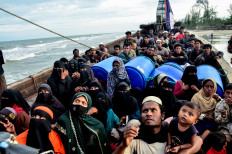
Justice sans borders: Southeast Asia’s bold stand against Myanmar junta
While traditional diplomacy falters in the face of Myanmar’s military violence, a quiet legal revolution is brewing in Southeast Asia: By turning to domestic courts in Timor-Leste and Indonesia, survivors are testing a bold, universal legal theory to ensure that victims of mass atrocities finally have their day in court.
Asia & Pacific 5 months ago
PREMIUM
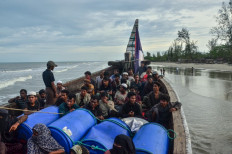
Activists pin hopes on Indonesia to hold Myanmar's new president accountable for genocide
Rohingya activists and legal advocacy groups are pinning their hopes on Indonesia’s new penal code to push forward a genocide case against Myanmar's newly-elected President Min Aung Hlaing, in what they say could be a long-awaited breakthrough for accountability.
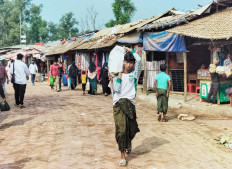
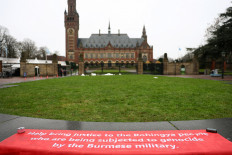
Asia & Pacific 8 months ago
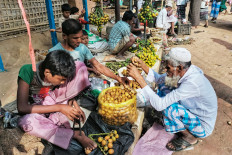
Rohingya survivors expect UN's highest court to find Myanmar committed genocide
Myanmar has denied accusations of genocide and said the 2017 offensive that forced at least 730,000 Rohingya from their homes and into neighboring Bangladesh was a legitimate counterterrorist operation.
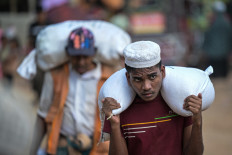
Asia & Pacific 9 months ago
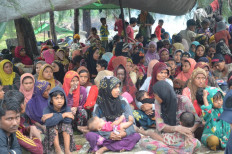
Stateless Rohingya rue Myanmar's election from exile
For the Rohingya minority, violence began well before the 2021 coup, with a military crackdown in 2017 sending legions of the mostly Muslim group fleeing Myanmar's Rakhine state to neighboring Muslim-majority Bangladesh.

Editor's Picks
Popular
- New islands appear after Anak Krakatau volcano erupts
- Prabowo resurrects advisory board
- Reshuffle shores up coalition support for 2029
- A ministry restored
- Whisky, big-screen TV seized from prison 'villas' in West Java
- Sugarcane farmers query House over sugar imports
- The agrarian reform law and investment prospects of palm oil
- Indonesia pushes cooperation to outpace global scam networks
- Can young Indonesians still afford home?
- Gibran’s fall, Prabowo’s power reconfiguration?


