The Jakarta Post
Please Update your browser
Your browser is out of date, and may not be compatible with our website. A list of the most popular web browsers can be found below.
Just click on the icons to get to the download page.


Popular Reads
Top Results
No results found. Please check your search term and try again
Can't find what you're looking for?
View all search results
Popular Reads
Top Results
No results found. Please check your search term and try again
Can't find what you're looking for?
View all search resultsslum

Academia 1 day ago
PREMIUM
Ensuring the human right to adequate housing in Indonesia
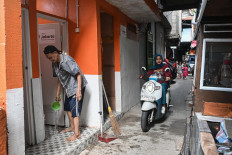
From the sun-starved alleys of Tambora to the sinking shores of Java, Indonesia’s urban future hinges on a vital shift: treating housing not just as four walls, but as a resilient, community-led ecosystem where dignity comes first.

Jakarta 6 months ago
PREMIUM
Senen shantytown residents in limbo over promised homes
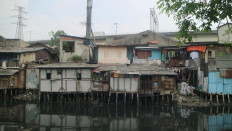
People who were living along the railway tracks in Senen were forcibly uprooted on Friday when heavy equipment allegedly rolled in to tear down their makeshift dwellings, before authorities had arranged temporary housing and the groundbreaking for a new Rusun project still weeks away.
Jakarta 10 months ago
PREMIUM
New database aims to strengthen Jakarta’s fight against slums
The administration is also working with Statistics Indonesia (BPS) to continue mapping community unit (RW) areas that fall into the slum category, as Jakarta targets to upgrade all of its slums by 2027 to improve overall quality of life.
Jakarta 1 year ago
PREMIUM
Jakarta battles open defecation with communal toilets
The Jakarta administration is aiming to build more communal toilets in dense neighborhoods to eliminate open defecation, which is still practiced by more than 5,000 households across the city, according to 2024 data by the Statistics Indonesia (BPS).

Jakarta 1 year ago
PREMIUM
Jakarta slum dwellers wary of eviction despite revitalization pledge
Jakarta Governor Pramono Anung has pledged to upgrade all of the city’s slum areas by 2027 without relocating any residents, but many remain skeptical, recalling past administrations that evicted people in the name of urban development.
Jakarta 2 years ago
PREMIUM
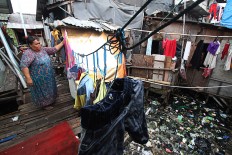
Prone to fire and fresh air problems, people in Tambora figure out life in a slum area
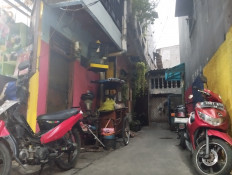
Living in a small alley near Duri Station in Tambora, West Jakarta, Nur Walidah, 37, prefers to sit outside her house, along with other mothers, while nurturing her four-year-old daughter.While the minimum standard of adequate living is a bit more than 7 square meters per person, it is not unheard for a family of four, or even more, to live in a cramped house as little as 15 sq m in size. On average, there are 17 Jakartans living to each 1 sq m of the city.

Society 3 years ago
PREMIUM
Govt open to a more integrated, community-minded approach in solving slums
The government state ministries will consider implementing a more integrated and community-minded approach in reorganizing slums across the country, using the several successful community-run projects as a model.
Editor's Picks
Popular
- Public health measures urged amid El Niño's extreme heat
- The agrarian reform law and investment prospects of palm oil
- Trade surplus grows in August on higher manufacturing exports
- A ministry restored
- Prabowo’s reshuffle bring ties with Jokowi back into focus
- Beyond bribery: Rethinking how Indonesia understands corruption
- New police chief orders major shake-up
- Bringing the military back in
- Mercenary recruitment becomes new threat for Riau Islands migrant workers
- Employers, workers struggle to find common ground as employment bill nears passage


