Latest Opinion Articles & News Commentary
Please Update your browser
Your browser is out of date, and may not be compatible with our website. A list of the most popular web browsers can be found below.
Just click on the icons to get to the download page.


Popular Reads
Top Results
No results found. Please check your search term and try again
Can't find what you're looking for?
View all search results
Popular Reads
Top Results
No results found. Please check your search term and try again
Can't find what you're looking for?
View all search results
Academia
Why China’s stimulus keeps missing the mark
Now that major trading partners are seeking to put up more barriers, Beijing may need to rethink its cautious approach to direct household stimulus.
12 hours ago
Academia
premium
Strengthening EU-Indonesia dialogue, advancing human rights
At a defining moment for global justice, the European Union and Indonesia are proving that defending universal human rights demands more than shared values: It takes a decade of sustained dialogue, bold reform and united action. ...
14 hours ago
Academia
premium
Fifth year and counting: ASEAN-Australia Comprehensive Strategic Partnership
From elevating ties to an unprecedented strategic partnership five years ago to tackling shared regional challenges, Australia and ASEAN continue to prove that our collective security and economic future are inextricably intertwined. ...
14 hours agoThe Latest
Academia
premium
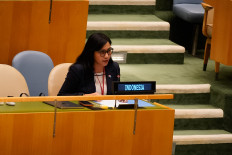
Decolonization and the geopolitics of legitimacy: From Morocco to Papua
When multilateral forums succumb to political theater and procedural breaches, the genuine legal principles of decolonization and sovereignty risk being lost to ideological distraction.
15 hours ago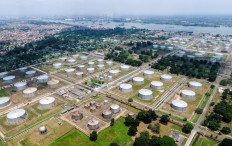
Academia
premium
Indonesia’s gas policy must deliver more than energy sovereignty
By choking off gas to Singapore to fuel the domestic industry, Jakarta is gambling that resource nationalism can build real economic muscle rather than simply leave stranded promises in its wake.
16 hours ago
Academia
premium
Redefining corruption misses the point of Indonesia’s judicial crisis
Redefining corruption to exclude "state losses" misses the real danger: changing the wording of the law cannot fix a justice system that still struggles to separate honest policy failures from corrupt intent.
17 hours ago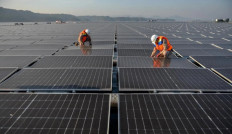
Opinion
premium
Analysis: PLN leadership shift signals solar ambitions, challenges remain
The appointment of Suroso Isnandar as president director of state-owned electricity company PT PLN comes as the government steps up efforts to deliver its ambitious 100 gigawatt-peak (GWp) solar power program. Having previously overseen renewable energy projects at PLN, Suroso is well positioned to lead the initiative. However, delivering the program within its three-year timeline will be challenging, given Indonesia’s structural constraints on integrating variable renewable energy (NRE) into its electricity grid.
17 hours ago
Editorial
premium
Another day, another warning
The government has underestimated wildfires and their consequences before; it cannot afford to make the same mistake again.
18 hours ago
Academia
premium
China faces a storm of political and fiscal risks
Though few dare to speculate about it publicly, an economic and political perfect storm is bearing down on China.
1 day ago
Academia
premium
BJ Habibie’s status in Indonesian history
One of the criteria for becoming a national hero is not having committed treason against the nation. Was BJ Habibie excluded because of this issue?
1 day ago
Academia
premium
Redefining corruption: Protection for economic power?
Narrowing corruption down to bribery may protect state investors from criminalized business losses, but without strict checks, it risks turning legal certainty into a shield for oligarchic power.
1 day ago
Academia
premium
Jakarta should not lower the bar for Myanmar
As a member of the Financial Action Task Force, Indonesia can help ensure Myanmar is judged by enforcement results, not by its new civilian title.
1 day ago
Academia
premium
ASEAN should press its Plus Three partners on denuclearization
With East Asia on the brink of a dangerous nuclear tipping point, ASEAN must abandon quiet diplomacy and force frank answers from Beijing, Tokyo, and Seoul at next month’s summit.
1 day ago
Academia
premium
Indonesia's gas export cuts: A costly blow to trust and regional leadership
At stake are Indonesia's credibility as an economic partner, its ability to attract long-term investment and its standing as a regional leader.
1 day ago
Opinion
premium
Analysis: Prabowo’s security shuffles: Lining up loyalists pre-2029
Nearly two years into his presidency, President Prabowo Subianto has moved decisively to tighten his grip on Indonesia’s two most powerful security institutions. A series of leadership changes at the National Police (Polri) and the Indonesian Military (TNI) this month have systematically reduced the residual influence of former president Joko “Jokowi” Widodo’s administration, realigning internal loyalties and strengthening presidential authority for the remainder of his term toward the 2029 elections.
1 day ago
Editorial
premium
Ending impunity, for good
By ordering an end to military tribunals for crimes, the Constitutional Court just dealt a decisive blow to decades of impunity and challenged parliament to prove no soldier is above the law.
1 day ago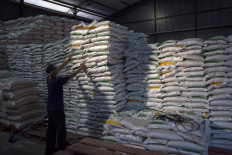
Academia
premium
Indonesia has a mountain of rice, but not food security
A record rice surplus is filling Bulog warehouses rather than lowering market prices, exposing a costly food policy that prioritizes managing inventory over feeding the poor.
3 days ago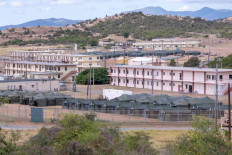
Academia
premium
Hambali: Southeast Asia’s last Guantanamo detainee
More than two decades after his capture, Southeast Asia’s most notorious jihadist remains trapped in legal purgatory at Guantanamo Bay, a relic of a forgotten war that neither Washington nor Jakarta has the political will or legal means to resolve.
3 days ago
Academia
premium
How Indonesian language could bridge education gaps
Advancing alternative and equitable ways of thinking about education is urgently needed, and the Indonesian language may have a role to play.
3 days ago
Academia
premium
Dissent in the halls of power: The intellectual’s dilemma
The ultimate test of an intellectual is not challenging power from the outside, but refusing to become its mouthpiece once invited inside.
3 days ago
Opinion
premium
Analysis: A sugar excise too small to matter
A tax on sugar-sweetened beverages (SSB) is planned from the second half of 2027, the government has said, after making similar promises almost every year since 2022. The levy is expected to raise Rp 1.7 trillion (US$95 million), while diabetes care alone cost the national health insurance an estimated Rp 12.6 trillion in 2024. At its planned scale, the proposed levy risks falling short as both a public health measure and a revenue-generating instrument.
3 days ago
Academia
premium
Fostering, empowering youth in Indonesia’s foreign policy
To navigate a fractured world, Indonesia’s foreign policy must move beyond symbolic inclusion and treat its youth not just as tomorrow’s leaders, but as today’s strategic diplomatic partners.
3 days ago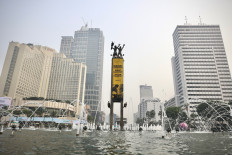
Editorial
premium
The lost art of listening
From choking haze to viral confrontations, public fury is simmering across the country, and continuing the dismissive official line instead of delivering solutions risks sparking a full-blown crisis of legitimacy.
3 days ago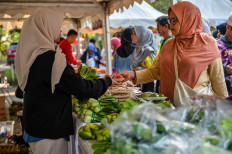
Academia
premium
The FAO we need for the future of food security
To end global hunger in an era of compounding crises, we must stop reacting to disasters and start turning frontline innovations into rapid, equitable impacts.
4 days ago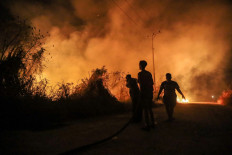
Academia
premium
Why Indonesia keeps repeating its forest fire crisis
We have accumulated experience, yet too often respond as though we are encountering fires for the first time.
4 days ago
Academia
premium
Going green is not enough for industrial parks to thrive
The upcoming Industrial Estate Law must decide whether its manufacturing hubs remain mere clusters of concrete and carbon targets, or evolve into fully integrated, people-first eco-industrial ecosystems.
4 days ago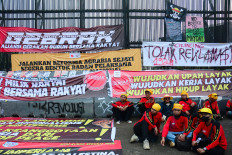
Academia
premium
Breathing new life into organized labor
Fulfilling the ILO’s promise of defending workers’ rights will require more than another declaration or incremental institutional reform: There must be a concerted global effort to create an enabling environment for all workers and their organizations to operate across borders as easily as capital does.
4 days ago
Academia
premium
Maximum coalition, minimum performance
Political stability at the elite level has not yet translated into improvements in the economy, public services and the quality of governance.
4 days ago
Academia
premium
Resetting Indonesia’s capital market needs verified integrity
Indonesia cannot restore foreign investor confidence with emergency price supports or rhetoric. It must prove the integrity of its markets through independent verification of ownership and true liquidity.
4 days ago
Opinion
premium
Analysis: SOE IPOs face an uphill battle against historical pitfalls
State asset fund Danantara plans to take several state-owned enterprises (SOEs) public in 2027, but whether the listings will attract investor interest remains uncertain. The companies have yet to be identified, and Danantara has pledged to conduct rigorous reviews before determining which are ready to enter the stock market. The key question, however, is whether the selected companies can offer sustainable returns and adequate investor protection, or whether the IPOs will serve primarily as a fundraising measure, leaving investors exposed to losses rather than potential capital gains, as previous cases suggest.
4 days agoPopular
- RI urges umrah pilgrims to avoid Singapore, Malaysia transit flights
- Prabowo begins third year with tighter grip as public support slips
- Indonesia's gas export cuts: A costly blow to trust and regional leadership
- Power for the people
- Indonesia, Singapore at odds as gas export cut raises energy concerns
- Jakarta should not lower the bar for Myanmar
- Decolonization and the geopolitics of legitimacy: From Morocco to Papua
- Navy thwarts departure of 12 Vietnamese from Batam to Malaysia
- Indonesia has a mountain of rice, but not food security
- In Singapore, Merz seeks to widen market access to counter trade restrictions