TheJakartaPost
Please Update your browser
Your browser is out of date, and may not be compatible with our website. A list of the most popular web browsers can be found below.
Just click on the icons to get to the download page.


Popular Reads
Top Results
No results found. Please check your search term and try again
Can't find what you're looking for?
View all search results
Popular Reads
Top Results
No results found. Please check your search term and try again
Can't find what you're looking for?
View all search resultsHow to help the world’s poor most effectively
While over 8 percent of the global population is still undernourished, helping children in poor countries in the first 1,000 days of their lives, in the womb and in their first years, can do phenomenal good for little money.
Change text size
Gift Premium Articles
to Anyone
Share the best of The Jakarta Post with friends, family, or colleagues. As a subscriber, you can gift 3 to 5 articles each month that anyone can read—no subscription needed!
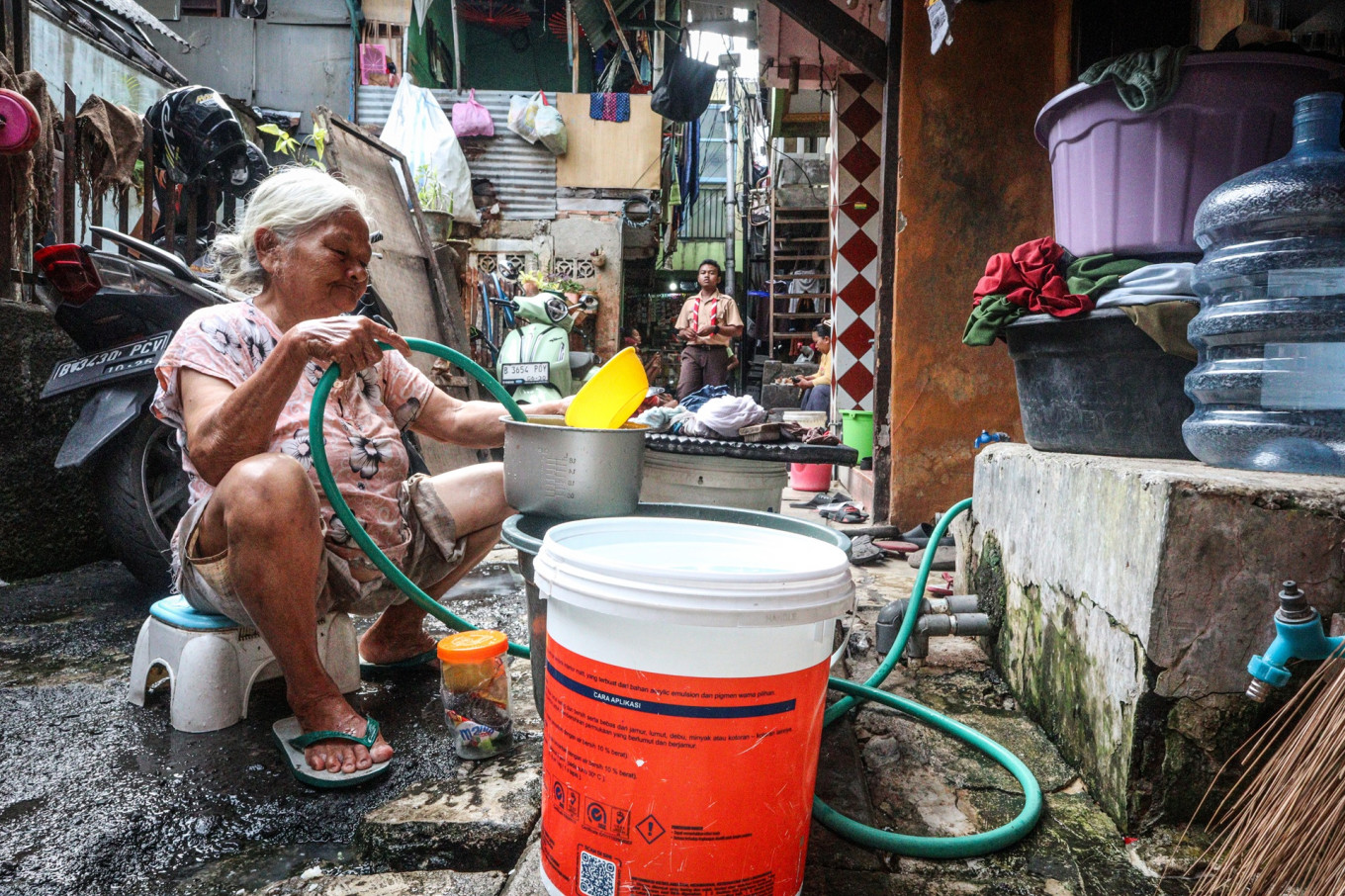 A woman washes dishes on Nov. 26, 2025, in a crowded neighborhood in Tanah Tinggi, Central Jakarta. The United Nations's 2025 World Urbanization Prospects on Nov. 18 named the greater Jakarta area as the world's most populous city with a 42 million population, followed by Dhaka, 37 million, and long-time titleholder Tokyo, 33 million. (Antara/Muhammad Rizky Febriansyah)
A
s 2025 draws to a close, it is natural to turn our thoughts to the good we can do in the coming year, not just for our families and communities, but for the world at large. The holidays are a moment not just for personal resolutions, but for asking a bigger question: how can we help the world’s poor as effectively as possible?
The United Nations attempt to answer that question effectively died this year. A decade ago, it committed everything to everyone through the Sustainable Development Goals (SDGs), it would fix poverty, hunger, disease, unemployment, climate change and war by 2030. This year’s progress report admitted the painful truth: Only 18 percent of the 169 UN targets are on track, while a third are stalled or going backward.
We did not hear much about these development challenges because 2025 had been already crowded with urgent geopolitical and economic news. Russia’s war in Ukraine continued to drive up food and fertilizer prices. Conflicts in the Middle East and Sudan have displaced millions. Ballooning debt costs in developing countries made it ever harder to invest in health and education.
Rich nations, facing their own geopolitical threats, inflation and deficits, slashed foreign-aid budgets. After a 9 percent drop in 2024, we are likely to see another 9 to 17 percent decline in 2025. Aid for the world’s poorest countries could be cut by one-quarter. At the same time, major development organizations now divert over US$85 billion of aid toward virtue-signaling climate projects, further starving basic development.
The sobering truth is that 2026 will mean even fewer resources to do good. We have to stop pretending that we can afford to do everything all at once, as the SDGs still do. When each dollar is fought over, dividing 100 cents across 169 promises means minimal progress anywhere.
But there are still hopeful ways to help in 2026. My think tank, the Copenhagen Consensus, has spent years working with more than 100 top economists and several Nobel laureates to answer a simple question: Given money is tight, where can each scarce dollar do the most good?

Our peer-reviewed research, published for free in a series of research papers with Cambridge University Press, points to 12 phenomenal policies that deliver astonishing returns even in today’s harsh fiscal reality.