TheJakartaPost
Please Update your browser
Your browser is out of date, and may not be compatible with our website. A list of the most popular web browsers can be found below.
Just click on the icons to get to the download page.


Popular Reads
Top Results
No results found. Please check your search term and try again
Can't find what you're looking for?
View all search results
Popular Reads
Top Results
No results found. Please check your search term and try again
Can't find what you're looking for?
View all search resultsWhy Muhammadiyah must return its mining concession
If it enters the mining industry, Muhammadiyah risks being reduced to a mere “digger”, bearing severe ecological and social liabilities while others reap the value.
Change text size
Gift Premium Articles
to Anyone
Share the best of The Jakarta Post with friends, family, or colleagues. As a subscriber, you can gift 3 to 5 articles each month that anyone can read—no subscription needed!
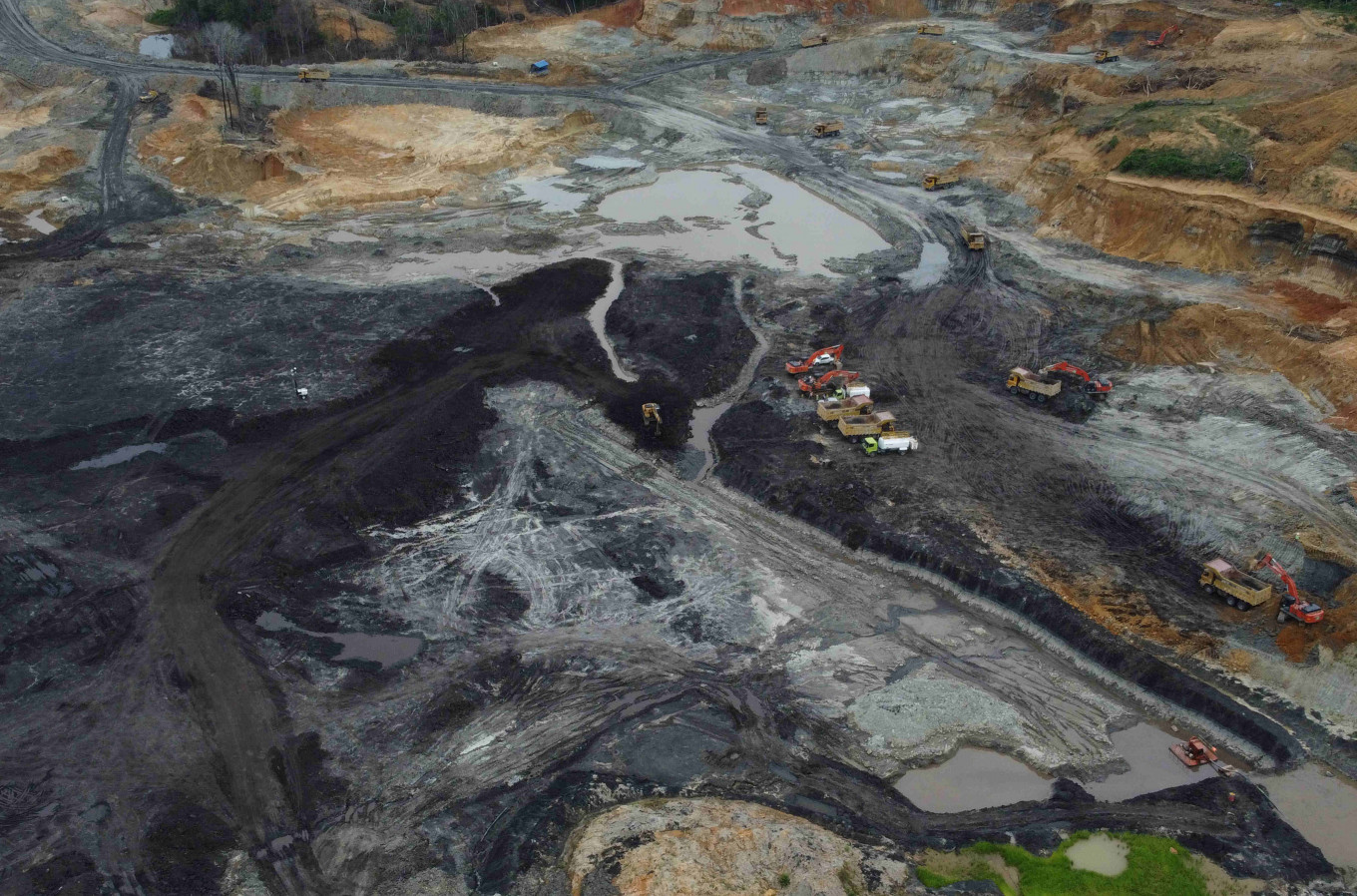 Heavy machines operate on May 24, 2024, at a
coal mine in Sumber Batu village, Meureubo district,
Aceh. Indonesia produced 138 million tonnes of coal in
the first three months of 2024, around 24 percent less than
the 183 million tonnes it produced in the same period last
year. (Antara/Syifa Yulinnas)
Heavy machines operate on May 24, 2024, at a
coal mine in Sumber Batu village, Meureubo district,
Aceh. Indonesia produced 138 million tonnes of coal in
the first three months of 2024, around 24 percent less than
the 183 million tonnes it produced in the same period last
year. (Antara/Syifa Yulinnas)
T
he massive floods and landslides that recently devastated parts of Sumatra have awakened us to the sheer scale of the environmental destruction ravaging the landscape. The National Disaster Management Agency (BNPB) reported more than 1,000 deaths and approximately 1.1 million residents forced to evacuate.
This ecological disaster is inextricably linked to an extractive model of mining expansion and land clearing. Since 2016, the Indonesian Forum for the Environment (Walhi) has recorded the loss of 1.4 million hectares of forest in Aceh, North Sumatra and West Sumatra due to the operations of 631 mining, palm oil and forestry companies.
Amid this crisis of natural resource governance, Muhammadiyah's decision to accept a mining concession from the government, even though it has not yet been implemented, must be reconsidered.
Former Muhammadiyah chairman Din Syamsuddin has highlighted the potential for conflicts of interest and the risk of moral hazard, specifically the loss of moral independence, should Muhammadiyah enter this problematic industry. Similarly, Muhammadiyah Secretary General Abdul Mu'ti has warned against the "three Ks": konflik (conflict), korupsi (corruption) and kehancuran (destruction).
The recent disasters indicate that "destruction" is no longer a risk, but a reality. The Quran, in Surah Al-A'raf (7:56), provides the theological basis for this warning: “And do not do mischief on the earth, after it has been set in order.”
The Indonesian Bishops' Conference (KWI) has already firmly rejected the government's offer of mining concessions, deeming the sector outside the purview of its religious mandate.

Ethical precedents also exist globally: The Catholic Church of the Philippines opposed open-pit mining in 2017, the Islamic Climate Declaration in Istanbul (2015) called on Muslims to distance themselves from extractive industries and the Vatican, through its Institute for the Works of Religion (IOR), began divesting from fossil fuels in 2020.