TheJakartaPost
Please Update your browser
Your browser is out of date, and may not be compatible with our website. A list of the most popular web browsers can be found below.
Just click on the icons to get to the download page.


Popular Reads
Top Results
No results found. Please check your search term and try again
Can't find what you're looking for?
View all search results
Popular Reads
Top Results
No results found. Please check your search term and try again
Can't find what you're looking for?
View all search resultsFrom zero to coverage: Why insurance in Southeast Asia is at a tipping point
Insurance in Southeast Asia is reaching a structural turning point, Indonesia is showing what the next decade will look like.
Change text size
Gift Premium Articles
to Anyone
Share the best of The Jakarta Post with friends, family, or colleagues. As a subscriber, you can gift 3 to 5 articles each month that anyone can read—no subscription needed!
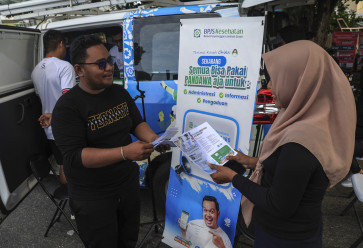
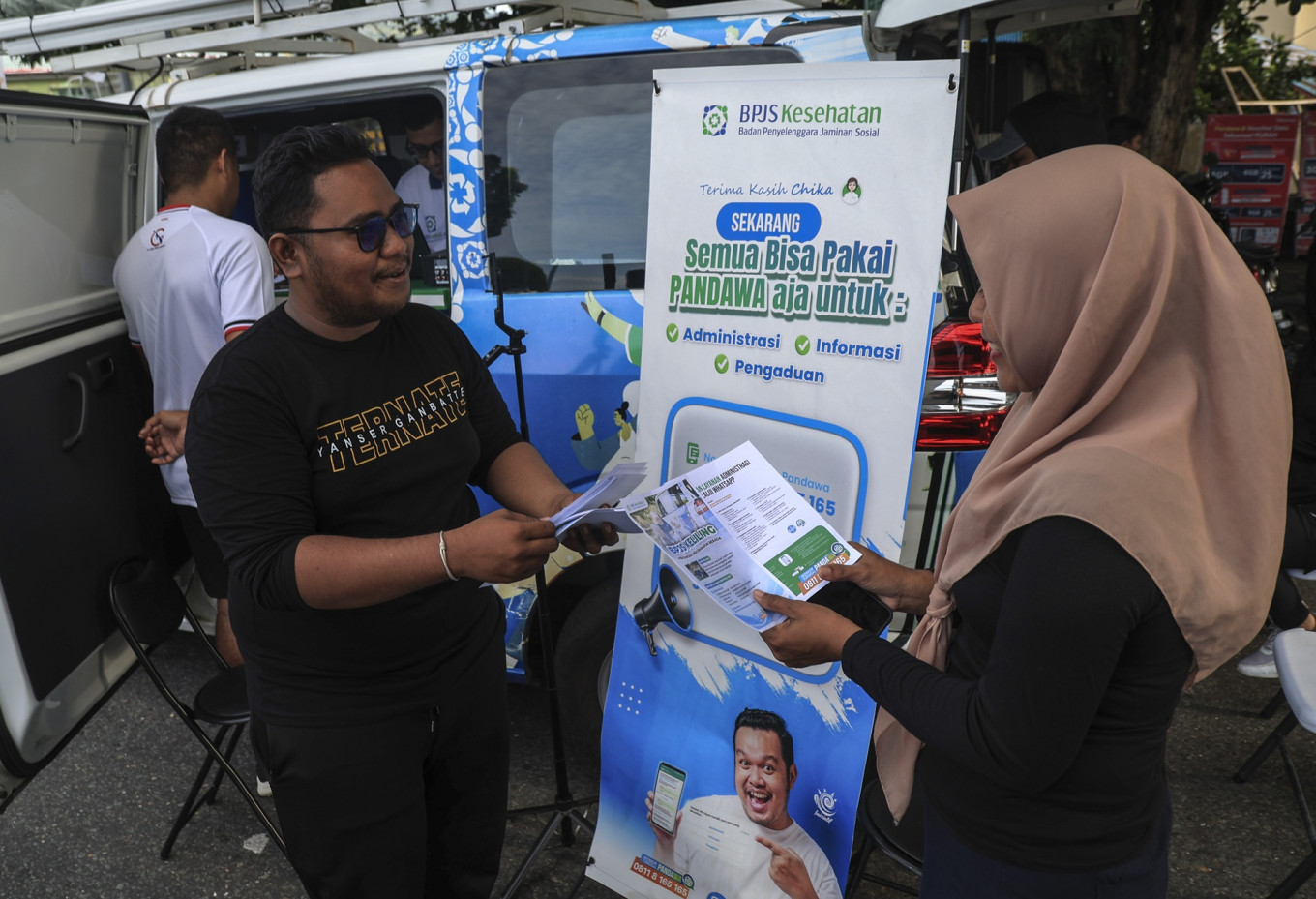 A Health Care and Social Security Agency (BPJS Kesehatan) official provides information about the National Health Insurance (JKN) to passers-by during a car-free day event in Ternate, North Maluku, on Aug. 10, 2025. (Antara/Andri Saputra)
I
ndonesia anchors the region’s growth story with its 283 million people and fast-rising middle class. Across Southeast Asia, insurance is shifting from a peripheral purchase to a foundational part of financial planning. Rising incomes, digital adoption and demographic change are pushing protection into the mainstream. Southeast Asia is now at an inflection point.
Insurance penetration in Southeast Asia remains far below global norms. Indonesia stood at just 1.4 percent of GDP according to the ASEAN Insurance Surveillance Report 2022. The Philippines remains similarly low, with most estimates placing penetration below 2 percent, Malaysia and Thailand sit higher at 3.8 and 4.6 percent respectively, and Singapore is far ahead at 12.5 percent. Yet even with this variation, the region as a whole still reflects a deep protection gap.
In reality, it is one of Southeast Asia’s greatest opportunities. A young population is earning more, saving more, and becoming more conscious of financial risk. As awareness rises, the shift from “insurance as a nice-to-have” to “insurance as a basic need” becomes inevitable.
Indonesia shows this transition clearly. Industry forecasts indicate the country’s general insurance market is set to grow at a compound annual growth rate of around 9 percent, increasing from US$5.3 billion in 2023 to $7.1 billion by 2027, according to GlobalData. Rising consumer awareness and stronger demand for health, mobility and retail protection, driven by a young population with increasing purchasing power, are shifting insurance from a discretionary spend to a basic financial need.
The pandemic did more than highlight health risks. It changed how people think about preparedness, convenience and transparency.
Across the region, many incumbents still treat digitalization as putting old processes behind a screen, such as PDF policies, online forms and cosmetic upgrades. But real change requires rebuilding the experience end-to-end.

Digital onboarding, automated underwriting and same-day claims have shifted from “nice-to-have” to table stakes. These are now the expectations of a younger, more demanding customer, and they are setting the pace for the industry.