TheJakartaPost
Please Update your browser
Your browser is out of date, and may not be compatible with our website. A list of the most popular web browsers can be found below.
Just click on the icons to get to the download page.


Popular Reads
Top Results
No results found. Please check your search term and try again
Can't find what you're looking for?
View all search results
Popular Reads
Top Results
No results found. Please check your search term and try again
Can't find what you're looking for?
View all search resultsDon’t let the 100 GW solar ambition become another Nusantara
To realize its 100 GW solar power generation, Indonesia must utilize international financing, particularly from China, which is pivoting its overseas investments toward clean energy.
Change text size
Gift Premium Articles
to Anyone
Share the best of The Jakarta Post with friends, family, or colleagues. As a subscriber, you can gift 3 to 5 articles each month that anyone can read—no subscription needed!
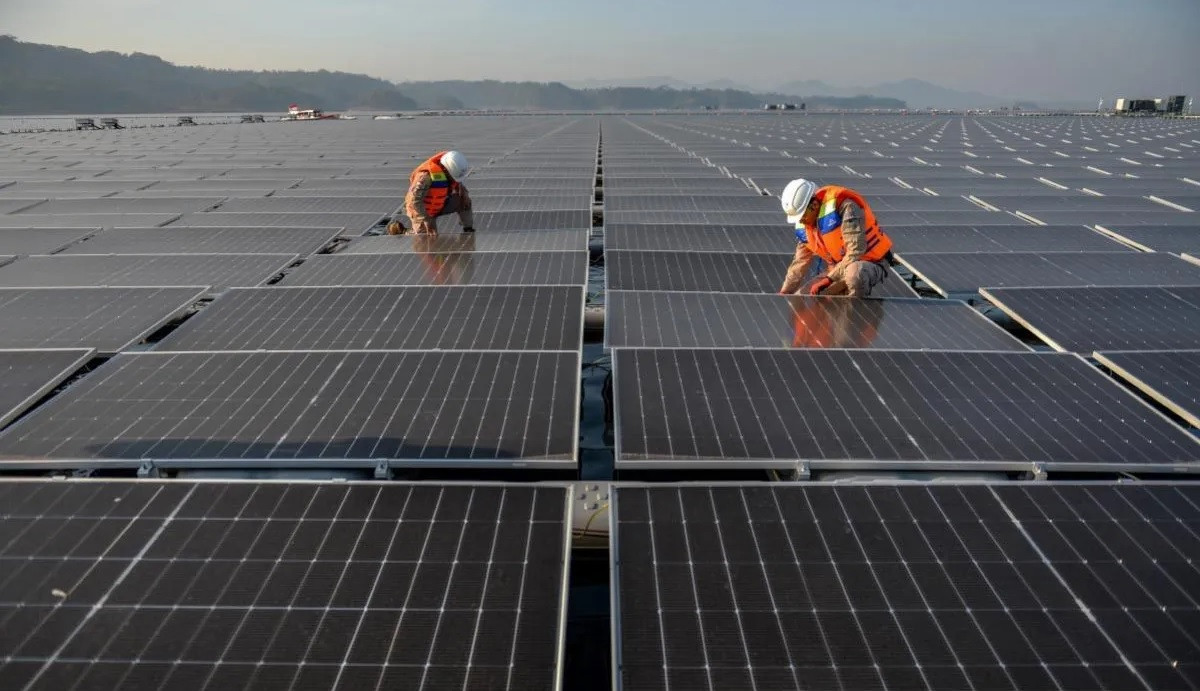 Technicians check panels on Sept. 29, 2023 at the Cirata floating solar photovoltaic plant, located at Cirata Reservoir in Purwakarta, West Java. (Antara/Raisan Al Farisi)
A
t the recent United Nations climate conference (COP30) in Belém, Brazil, Indonesia was handed the dubious distinction of the "Fossil of the Day" award by an international coalition of civil society groups.
This satirical accolade casts significant doubt on the seriousness of Indonesia’s energy transition commitments, promises made by President Prabowo Subianto to the international community at the Group of 20 Summit in Rio de Janeiro, Brazil, last year and during his state visit to Brazil in July of this year.
The President has asserted that Indonesia aims to achieve net-zero emissions by 2050, a decade earlier than previously pledged, and reach 100 percent renewable energy within the next 10 years. Central to this vision is the ambitious target of installing 100 gigawatts (GW) of solar energy. The plan involves deploying 80 GW through decentralized systems across 80,000 villages, with the remaining 20 GW generated by centralized solar power plants.
If executed well, this initiative represents a strategic opportunity to accelerate the energy transition, stimulate demand for domestic solar and battery manufacturing and create green jobs.
However, the logistics are daunting. Installing solar panels across 80,000 villages will require massive capital, estimated at US$100 billion. This presents a huge hurdle.
According to the Institute for Energy Economics and Financial Analysis (IEEFA), Indonesia’s renewable investment remains dangerously low, reaching only Rp 24 trillion (US$1.5 billion) in 2023, despite the fact that it ranks among the world’s largest greenhouse gas emitters. Furthermore, the state budget is already strained by priority programs, such as the free nutritious meal program and rising debt obligations.

Without a concrete financing and governance plan, this solar initiative risks stalling, mirroring the struggles of the future capital city project in Nusantara. This is to say nothing of the billions of dollars from the state budget already poured into the capital relocation to East Kalimantan with mixed results. To prevent the solar program from suffering a similar fate, Indonesia must explore alternative financing to provide critical early-stage capital.