TheJakartaPost
Please Update your browser
Your browser is out of date, and may not be compatible with our website. A list of the most popular web browsers can be found below.
Just click on the icons to get to the download page.


Popular Reads
Top Results
No results found. Please check your search term and try again
Can't find what you're looking for?
View all search results
Popular Reads
Top Results
No results found. Please check your search term and try again
Can't find what you're looking for?
View all search resultsCan artificial intelligence end the political blame game?
Under President Soeharto's administration, the blame game seemed to evolve into a tool for active control.
Change text size
Gift Premium Articles
to Anyone
Share the best of The Jakarta Post with friends, family, or colleagues. As a subscriber, you can gift 3 to 5 articles each month that anyone can read—no subscription needed!
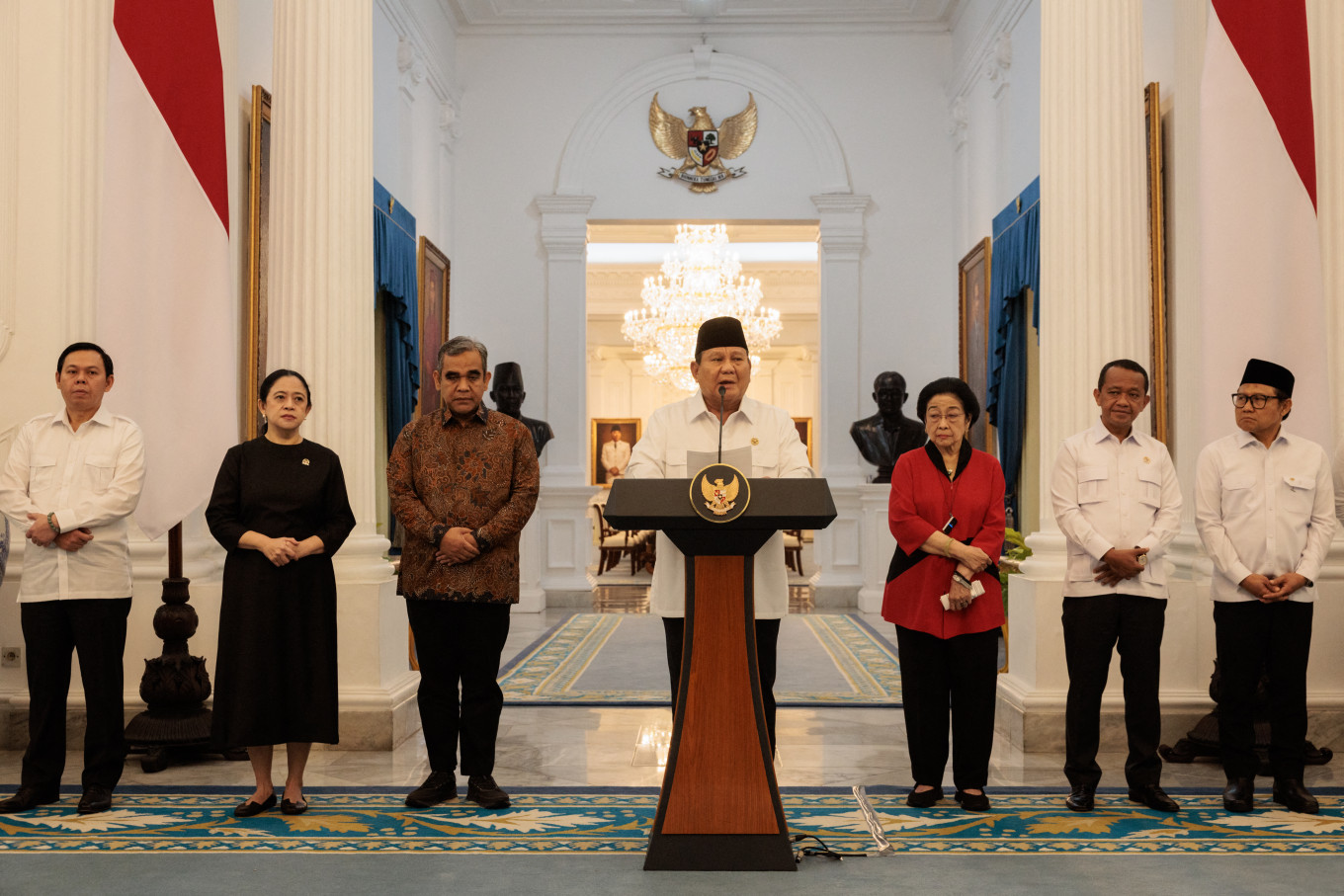 President Prabowo Subianto speaks about the wave of nationwide protests during a press conference on Aug. 31 alongside political party leaders at the State Palace in Jakarta. Prabowo spoke out against protests over economic conditions and inequality, saying some actions in rallies that have spread across the country in recent days amounted to treason and terrorism. (AFP/Yasuyoshi Chiba)
I
n the unstable world of global politics, it often seems that legitimacy is more valuable than truth. When crises happen, such as high inflation, social unrest or military failure, leaders face a difficult choice that could decide their political survival. They can either accept responsibility, which puts their position at risk, or play it safe by blaming someone else.
History suggests that the second option, often called the "blame game", is the standard method for political survival. This should be understood not just as a way to speak to the public, but as a strategic tool used by governments to protect themselves from being held responsible.
One of the clearest historical examples of this strategy can be found in the Soviet Union during the mid-20th century. When Nikita Khrushchev denounced Joseph Stalin in 1956, it was likely not an attempt to destroy the totalitarian system, but an effort to save it. By blaming all the horrors of that era solely on Stalin, the Soviet elite performed a political maneuver that allowed them to restore the Communist Party’s image.
This strategy suggests that by placing all the regime's sins onto one dead leader, the surviving officials could present themselves as victims rather than partners in crime. They effectively used the memory of the former leader to absorb the guilt of an entire generation.
A similar method appeared to be used closer to home during Indonesia's New Order era (1966–1998). Under President Soeharto's administration, the blame game seemed to evolve into a tool for active control. The regime frequently used the idea of a "third party" or a hidden danger to explain social conflicts.
When labor strikes or land disputes occurred, the official narrative rarely focused on the real complaints of the citizens. Instead, officials would often point to organizations without form, organisasi tenpa bentuk , if not communists.

This was a vague label which implied that invisible, dangerous forces were manipulating the people. This strategy likely served to take power away from citizens, treating them like easily provoked children while positioning the government as a father figure protecting them from these phantom threats.