Can't find what you're looking for?
View all search resultsCan't find what you're looking for?

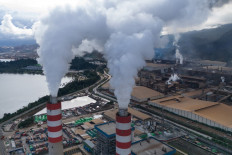
View all search resultsAs ASEAN deepens its energy ties with Moscow, the bloc faces a volatile new reality defined by long-range drone strikes deep inside Russian territory. To safeguard its economic future, Southeast Asia must balance the allure of vast Siberian reserves against the growing vulnerability of the infrastructure that delivers them.
Indonesia's labor market is sending mixed signals. Official data show unemployment declining, yet claims for unemployment and old-age benefits are surging, while job seekers now spend nearly 20 months on average searching for work. The contradiction raises a broader question: Is Indonesia’s labor market improving, or are conventional unemployment statistics failing to capture growing pressures beneath the surface?
A conflict in the Middle East is no longer a distant geopolitical issue for Indonesia—it is an immediate threat that has forced energy security and economic sovereignty to the absolute forefront. To survive global price shocks and supply risks, the nation must transform its energy transition from a climate agenda into a strategic shield by scaling domestic renewables, biofuels and regional supply networks.
The government's plan to task newly formed DSI with managing strategic commodity exports could spell increased credit risk for producers, though more robust or diversified companies are likely to better weather the policy shift, says a June 12 report from Fitch Ratings.
Stabilizing the rupiah at Rp 18,000 requires Indonesia to look past trailing GDP growth and actively rebuild market confidence by enforcing strict resource export repatriation, maintaining clean fiscal governance and speaking to global capital with a single, clear technocratic voice.
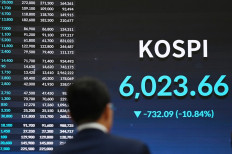
Indonesia’s financial markets have experienced significant turbulence in recent weeks, with the rupiah depreciating beyond Rp 18,000 per US dollar, the Indonesian Stock Exchange (IDX) Composite index falling by nearly half to below 6,000 points, 10-year government bond yields have climbed to 7.3 percent and the yield curve has flattened considerably amid substantial capital outflows. Together, these indicators suggest that investors are losing confidence in the government’s economic management. Yet the government has shown little indication of adjusting its policy direction.
Share your experiences, suggestions, and any issues you've encountered on The Jakarta Post. We're here to listen.
Thank you for sharing your thoughts. We appreciate your feedback.