Can't find what you're looking for?
View all search resultsCan't find what you're looking for?

View all search resultsThe rush toward EV and biofuel adoption risks shifting Indonesia’s ecological burden from coal chimneys to indigenous forests. True energy sovereignty lays not in massive corporate permits but in the resilient, community-led models already thriving in the heart of the archipelago.
A potentially widening budget deficit amid soaring global oil prices has prompted Finance Minister Purbaya Yudhi Sadewa to explore alternative revenue sources, including export duties on nickel and coal, commodities that are currently benefiting from relatively strong price trends. The push for rapid revenue mobilization, however, appears to be running ahead of sectoral readiness.
Previously, Indonesia announced plans to cut output quotas for several minerals this year to help support prices, including reducing the coal production quota from 790 million tons last year to 600 million metric tons.
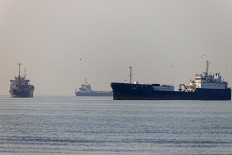
A prolonged disruption of maritime traffic in the Middle East could paralyze high-pressure acid leaching (HPAL) operations to produce mixed hydroxide precipitate (MHP) in Indonesia, an industry group has warned, given the country’s heavy reliance on sulfur shipments from the region.
Industry players warn that a push to diversify investment in Indonesia’s minerals sector under the Agreement on Reciprocal Trade (ART) signed with the United States last week must not disrupt the nickel ecosystem.
Nickel miner PT Vale Indonesia is seeking approval to revise its annual production plan (RKAB) after revealing that its current ore production quota is insufficient to meet supply commitments for three major high-pressure acid leach (HPAL) projects.
Share your experiences, suggestions, and any issues you've encountered on The Jakarta Post. We're here to listen.
Thank you for sharing your thoughts. We appreciate your feedback.