The Jakarta Post
Please Update your browser
Your browser is out of date, and may not be compatible with our website. A list of the most popular web browsers can be found below.
Just click on the icons to get to the download page.


Popular Reads
Top Results
No results found. Please check your search term and try again
Can't find what you're looking for?
View all search results
Popular Reads
Top Results
No results found. Please check your search term and try again
Can't find what you're looking for?
View all search resultsprotest
Academia 2 months ago
PREMIUM
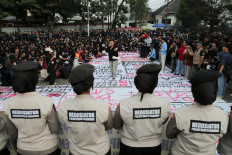
The new Indonesian rebellion: Build, don’t just protest
While student protests expose deep-seated anxieties over economic mismanagement, Indonesia's ultimate survival relies on shifting its revolutionary spirit away from the streets and toward breaking the shackles of economic stagnation.

Politics 2 months ago
PREMIUM
Gibran’s outreach to student protesters prompts scrutiny over his political motives
Vice President Gibran Rakabuming Raka’s decision to engage with student protesters amid waves of demonstrations against President Prabowo Subianto’s flagship programs has raised questions about whether the move is aimed at increasing his political visibility and the possibility of a meaningful policy response.
Archipelago 2 months ago
PREMIUM
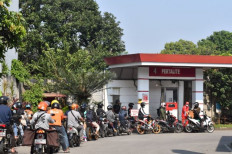
Protests erupt in North Sumatra amid subsidized fuel shortage
In North Sumatra’s capital Medan, hundreds of ojol (online motorcycle transportation) drivers protested outside Pertamina's office on Thursday, demanding a solution to fuel shortages that have led to long queues at gas stations across the city.
Editorial 2 months ago
PREMIUM
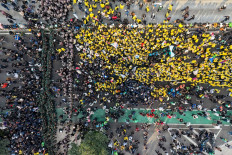
Protest works
In the 20 months that he has been in power, the President has not only had to deal with street protests early in his administration, he has also had to face relentless demonstrations that ebbed and flowed depending on how well the public responded to his policies.
Politics 2 months ago
PREMIUM
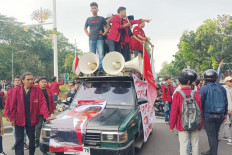
More student protests against costly programs, fuel price hikes
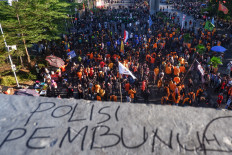
Following protests on Friday, students swarmed streets in Central Jakarta to demand a halt to the government's costly flagship programs and a national strategy to improve the economy, including steps to curb the rise in prices of fuel and basic necessities.
Archipelago 4 months ago
PREMIUM
East Kalimantan council backs move to investigate governor after protests
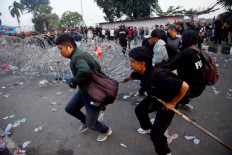
Twenty-one of the council’s 55 members signed on Monday the motion to invoke the right of inquiry. Eight of nine parties in the DPRD support the move, while Golkar, the governor’s party and the largest faction with 15 seats, has withheld its backing.
Editor's Picks
Popular
- Much ado about asset forfeiture
- Mass poisonings cast doubt on free meals reforms
- The benefit of the doubt has expired
- New data rules could unlock cross-border data flows
- Prabowo replaces Finance Minister Purbaya with his deputy
- Children are no longer the priority, were they ever?
- Six killed, 129 missing after ferry capsizes off Java
- Prabowo sacks Purbaya, turns to familiar hand at Finance Ministry
- SOE dividend grab tests Danantara’s mandate
- Prabowo calls for Global South, BRICS unity amid fragmented world order


