The Jakarta Post
Please Update your browser
Your browser is out of date, and may not be compatible with our website. A list of the most popular web browsers can be found below.
Just click on the icons to get to the download page.


Popular Reads
Top Results
No results found. Please check your search term and try again
Can't find what you're looking for?
View all search results
Popular Reads
Top Results
No results found. Please check your search term and try again
Can't find what you're looking for?
View all search resultssouth-china-sea

Asia & Pacific 2 months ago
PREMIUM
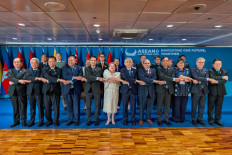
Indonesia urges resilient ASEAN as ministers meet
Indonesia will use this week's ASEAN foreign ministers' meetings in Manila to push for a more resilient, forward-looking and strategically independent regional bloc, arguing that Southeast Asia must strengthen its internal cohesion as geopolitical rivalries and global conflicts increasingly spill into the region.


Asia & Pacific 2 months ago
PREMIUM
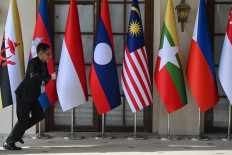
Indonesian officials cancel participation at SCS tribunal commemorative conference
The Permanent Court of Arbitration (PCA) ruled in favor of the Philippines on July 12, 2016, clarifying that China’s claim over maritime areas within the so-called “nine-dash line” have no lawful effect, unless stipulated by the United Nations Convention on the Law of the Sea (UNCLOS). China, as well as Taiwan, rejected the ruling.
Academia 3 months ago
PREMIUM
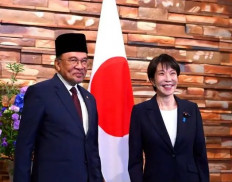
Beyond 'look East': Japan, Malaysia build partnership for uncertain age
Beyond formal military alliances, the evolving Japan-Malaysia partnership proves that decades of accumulated trust can be just as strategically valuable as a defense pact in an uncertain Indo-Pacific.
Editorial 4 months ago
PREMIUM
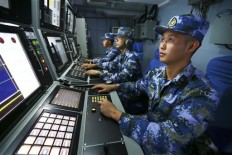
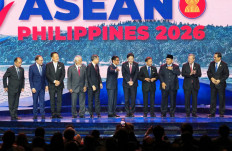
Still ASEAN leader?
Disunity has held back ASEAN from making progress on many fronts, particularly resolving the persistent issues in its backyard, and the same could also apply to the Prabowo administration's foreign policy stance as regards the bloc: Perhaps it is simply not the time for Indonesia to take up the regional mantle.
Asia & Pacific 4 months ago
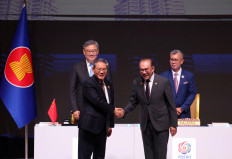
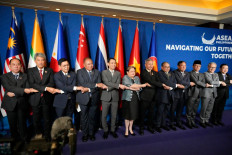
Energy crisis front and center as ASEAN leaders start summit
Conflicts far beyond Southeast Asia are expected to dominate discussions of leaders of the regional ASEAN bloc meeting in the Philippines, with the Middle East crisis posing significant challenges for its fuel import-dependent economies.
Editor's Picks
Popular
- Popular discontent is justified. Authoritarianism is not the answer
- Govt under pressure as 3 million home drive hits cracks
- Recentralization concerns in fiscal, education heighten
- Safeguarding Indonesia's AI future
- Batam residents protest data centers amid water crisis
- Canals full, roads submerged as Bangkok declares flood disaster
- Japan schoolboy, 11, wins gold while empty seats blight Asian Games
- Jakarta international airport extends closure after Anak Krakatau eruption
- Indonesians still have low awareness against pneumonia: Survey
- Philippines pardons, frees Mary Jane Veloso


