The Jakarta Post
Please Update your browser
Your browser is out of date, and may not be compatible with our website. A list of the most popular web browsers can be found below.
Just click on the icons to get to the download page.


Popular Reads
Top Results
No results found. Please check your search term and try again
Can't find what you're looking for?
View all search results
Popular Reads
Top Results
No results found. Please check your search term and try again
Can't find what you're looking for?
View all search resultsgeopolitics

Economy 1 month ago
PREMIUM
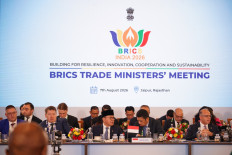
Indonesia presses BRICS to defend multilateralism amid trade shift
Indonesia also sought a preferential trade agreement (PTA) with South America’s Mercosur bloc as negotiations for a broader Indonesia-Mercosur Comprehensive Economic Partnership Agreement (IEU-CEPA) made little progress.
Opinion 1 month ago
PREMIUM
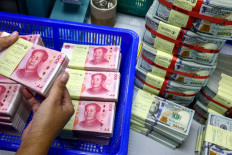
Analysis: Panda Bond success tests its geopolitical balancing act
Indonesia's latest return to China's capital market has been met with overwhelming demand as the government successfully issued two tranches of yuan-denominated Panda Bonds totaling 7 billion yuan (Rp 18.6 trillion or US$1.1 billion) to help finance the 2026 state budget. The offering was oversubscribed by 2.4 times, underscoring continued confidence in Indonesia's fiscal outlook. However, the timing of the issuance has also attracted attention, as it comes amid heightened scrutiny over Indonesia's economic relations with major global powers.
Academia 1 month ago
PREMIUM
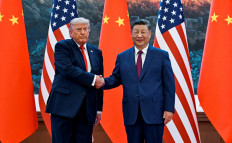
What a Sino-American G2 would mean for Asian security
The G2 concept that Trump has been touting lately is a highly unstable proposition that could make the emergence of a unipolar Asia more likely. Fortunately, Japan remains committed to advancing the far more effective “free and open Indo-Pacific" framework, with India as an indispensable partner.


Academia 1 month ago
PREMIUM
More nuclear states may be better; more strategic ambiguity never is
Indonesia's contribution should be to insist on what actually makes nuclear peace hold: declaratory transparency, no-first-use commitments, verified command-and-control safeguards and working crisis hotlines between adversaries.
Editorial 1 month ago
PREMIUM
ASEAN's 'flash point'
The joint comminuque resulting from last week's AMM made clear that ASEAN foreign ministers are fully cognizant of the region's parallels with the Mideast conflict, not least the issues pertaining to the vital South China Sea and its own pariah state, Myanmar.
Editor's Picks
Popular
- Much ado about asset forfeiture
- Mass poisonings cast doubt on free meals reforms
- Purbaya ousted after clash with Prabowo's ex-army colleague, sources say
- Children are no longer the priority, were they ever?
- Indonesia, China eye cooperation to boost 3 million homes program
- El Niño chokes Indonesia’s coal exports as rivers run shallow
- Not the Ministry of Magic
- Suahasil seen to prioritize fiscal discipline, continuity
- Whoosh takeover in limbo after Purbaya ousted as finance minister
- Sumatran elephants run out of room as fires spread


