The Jakarta Post
Please Update your browser
Your browser is out of date, and may not be compatible with our website. A list of the most popular web browsers can be found below.
Just click on the icons to get to the download page.


Popular Reads
Top Results
No results found. Please check your search term and try again
Can't find what you're looking for?
View all search results
Popular Reads
Top Results
No results found. Please check your search term and try again
Can't find what you're looking for?
View all search resultshouse-of-representatives
Politics 2 weeks ago
PREMIUM
Fresh push for asset forfeiture bill met with political concerns
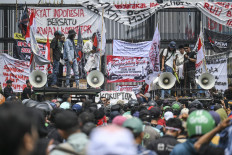
Critics say the new commitment to pass the asset forfeiture bill may be driven by the government’s need to finance President Prabowo Subianto’s flagship programs, while also underlining concerns about the lack of transparency around the draft law.


Society 3 weeks ago
PREMIUM
Civil groups seek better recognition for indigenous peoples in new bill
Civil society groups have presented their own draft bill on indigenous peoples to the House of Representatives, seeking legislation that would provide legal standing for the underserved and dispossessed.
Politics 3 weeks ago
PREMIUM
Calls mount for House transparency on asset forfeiture bill
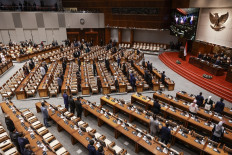
Calls are mounting for lawmakers to release their latest draft bill on asset forfeiture to the public, with antigraft activists warning that closed-door deliberations could leave the proposed legislation vulnerable to abuse.
Society 3 weeks ago
PREMIUM
House moves on agrarian reform legislation
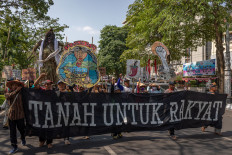
Baleg chair Bob Hasan asserted the bill should be aimed at promoting public welfare by ensuring legal protection for communities who possess land but lack legal certainty to back their claims, leaving them vulnerable to land grabbing.
Politics 3 weeks ago
PREMIUM
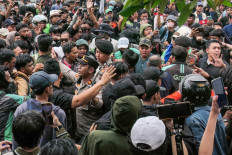
Jakarta deadly unrest prompts calls to probe alleged mobilizers
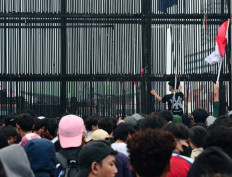
By late Thursday afternoon, another wave of people had gathered outside the Senayan Legislative Complex. Some burned trash and attempted to breach the perimeter, with violence continuing in the area through Friday morning. One man reportedly died during the unrest.
Politics 4 weeks ago
Post-protest unrest disrupts Jakarta commute
Friday morning saw the remnants of unrest following Thursday’s protest at the Senayan Legislative Complex, which spread into nearby Pejompongan and Slipi, where residents mounted a defense against unidentified groups via makeshift roadblocks.
Politics 4 weeks ago
PREMIUM
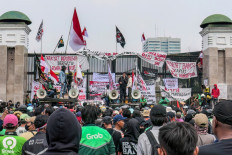
From Pati to Senayan, protesters take aim at corruption
Hundreds of protesters from Pati, Central Java, pressed the House of Representatives on Thursday to pass the long-delayed asset forfeiture bill to eradicate corruption, as thousands gathered the Senayan Legislative Complex to voice broader frustration over the country’s worsening economic conditions.
Editor's Picks
Popular
- Recentralization concerns in fiscal, education heighten
- Batam residents protest data centers amid water crisis
- Safeguarding Indonesia's AI future
- Twenty years on, BRICS faces a defining choice
- Crew member from missing Anak Krakatau boat identified
- Court decision tightens House oversight on free meals funding
- Popular discontent is justified. Authoritarianism is not the answer
- Gibran faces fresh challenge over eligibility as VP
- Indonesia puts peace, UN reform, Global South at center of UNGA agenda
- Govt under pressure as 3 million home drive hits cracks


