The Jakarta Post
Please Update your browser
Your browser is out of date, and may not be compatible with our website. A list of the most popular web browsers can be found below.
Just click on the icons to get to the download page.


Popular Reads
Top Results
No results found. Please check your search term and try again
Can't find what you're looking for?
View all search results
Popular Reads
Top Results
No results found. Please check your search term and try again
Can't find what you're looking for?
View all search resultsindo-pacific
Academia 4 months ago
PREMIUM
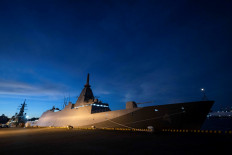
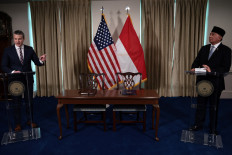
How US, Indonesia build strategic defense partnership anew
Washington is quietly rewriting the rules of Indo-Pacific strategy by swapping formal alliances for deep technological integration. The new defense pact with Indonesia proves that in the age of AI and autonomous warfare, operational "plug-and-play" matters far more than a signed treaty.
Academia 4 months ago
PREMIUM
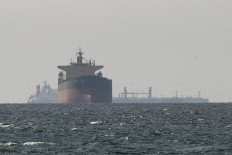
Lessons from the Iran crisis for the Indo-Pacific
As the Iran crisis draws US attention back to West Asia, the Indo-Pacific faces a dangerous vacuum in leadership and deterrence. This strategic overstretch is forcing regional powers like Japan, Australia and India to abandon their reliance on Washington and seize control of their own security destinies.
Academia 5 months ago
PREMIUM
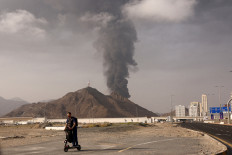
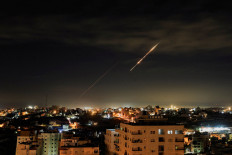
Smart air defense systems: A new chapter in modern air warfare
Iran’s model of smart air defense, combining geographic fragmentation, asymmetric resource management and layered deterrence, warrants a close study by developing countries such as Indonesia toward restructuring the national security doctrine for an integrated, hybrid approach.
Academia 5 months ago
PREMIUM
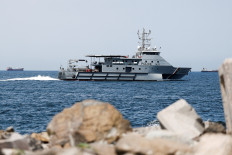
The anatomy of the Mideast war: 24 days that alter the nature of conflict
While Washington grapples with strategic disorientation, Tehran is inverting "Madman Theory" to build a new, lethal credibility through consistent execution. In this 24-day window, the nature of warfare has been altered, leaving neutral powers like Indonesia to navigate a world where ambiguity is no longer a shield.

Academia 5 months ago
PREMIUM
ASEAN at 60: Why the region needs a visionary secretary-general
ASEAN needs a secretary-general that can act as both secretary and general - someone capable of convening difficult conversations, anticipating emerging conflicts and articulating a compelling vision for ASEAN’s role in the world.
Academia 6 months ago
PREMIUM
Indonesia’s strategic autonomy in a fragmented global order
In an era of intensifying great-power rivalry and economic decoupling, Indonesia must move beyond passive non-alignment toward a doctrine of disciplined strategic autonomy. By integrating balance-of-power logic with sophisticated economic statecraft, Jakarta can transform global uncertainty into a source of national leverage.
Academia 6 months ago
PREMIUM
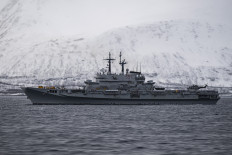
Integrating the Giuseppe Garibaldi into Indonesia’s national defense
As Indonesia enters the 2025–2029 strategic planning cycle, the shifting geopolitical dynamics of the Indo-Pacific demand a transition from static territorial defense to a highly mobile, networked maritime posture. The integration of the ex-Italian Navy aircraft carrier cruiser, Giuseppe Garibaldi, into the Indonesian Military is a strategic necessity as the new platform can serve as a vital anti-submarine warfare (ASW) hub and mobile command node.
Academia 6 months ago
PREMIUM
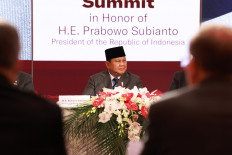
The rise of foreign policy presidents in leaderless world
In a world increasingly governed by the cynical logic of "might makes right," Indonesia is stepping forward to prove that visionary leadership and regional cooperation remain our most potent tools for reclaiming global peace.
Editor's Picks
Popular
- Mass poisonings cast doubt on free meals reforms
- Malaysia must not breathe Indonesia’s governance failure
- New data rules could unlock cross-border data flows
- The state's new muscle
- Jakarta airport and others reopen after volcanic ash crisis
- Anak Krakatau eruption halts flights, schools, fishing
- Soekarno-Hatta airport extends closure after Anak Krakatau eruption
- Barelang Police, Japanese diplomat hold meeting on Batam security
- Travelers scramble as Anak Krakatau ash exposes gaps in contingency plans
- Jakarta international airport extends closure after Anak Krakatau eruption


