The Jakarta Post
Please Update your browser
Your browser is out of date, and may not be compatible with our website. A list of the most popular web browsers can be found below.
Just click on the icons to get to the download page.


Popular Reads
Top Results
No results found. Please check your search term and try again
Can't find what you're looking for?
View all search results
Popular Reads
Top Results
No results found. Please check your search term and try again
Can't find what you're looking for?
View all search resultsindo-pacific
Academia 2 months ago
PREMIUM
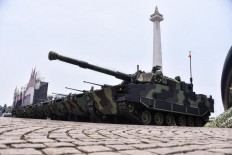
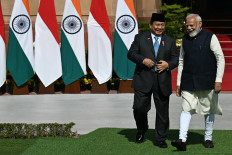
The Asian significance of Modi in Indonesia
As Prime Minister Modi heads to Jakarta amid a shifting global order, India and Indonesia are poised to transform their historical ties into a powerhouse strategic partnership spanning everything from missile deals to a new Indo-Pacific democratic alliance.
Academia 2 months ago
PREMIUM
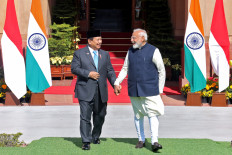
The golden age of India-Indonesia relations is unfolding
As two of the Indo-Pacific's largest democracies converge in Jakarta next week, India and Indonesia are moving past historical sentiment to forge a high-tech, maritime alliance that is destined to reshape the Global South.
Academia 2 months ago
PREMIUM
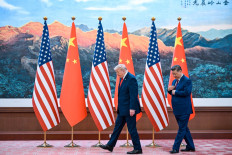
The new normal: Japan’s place in reconfigured US-China orbit
Behind the superficial stability of the latest United States-China summit blitz lies an enduring systemic rivalry, leaving an isolated Tokyo to step into the vacuum and anchor a fracturing international order.
Asia & Pacific 2 months ago
PREMIUM
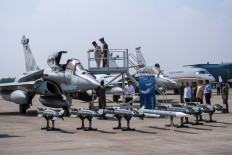
Budget cuts undermine Indonesia’s geopolitical strategy, warns study
Centralized policymaking on foreign policy may weaken the country’s institutional capacity in responding to a potential conflict between bigger nations in the Indo-Pacific, as suggested by a recent report.
Academia 2 months ago
PREMIUM
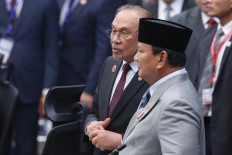
Japan-ASEAN cooperation continues to evolve in an age of turbulence
As geopolitical and technological shifts rock the region, Japan and ASEAN are evolving their 50-year "heart-to-heart" partnership into an indispensable anchor for Indo-Pacific stability and economic resilience.


Academia 2 months ago
PREMIUM
Why Indonesia must become a strategic pivot state
The blurring lines between the Middle East and the Indo-Pacific signal the death of predictable globalization and the rise of a volatile, multi-theater era of systemic competition. To avoid becoming a mere spectator to great power rivalry, Indonesia must shed its passive neutrality and embrace "Strategic Autonomy 2.0" toward bold, technological sovereignty.
Academia 2 months ago
PREMIUM
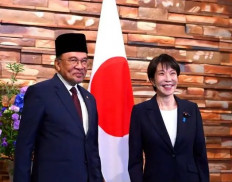
Beyond 'look East': Japan, Malaysia build partnership for uncertain age
Beyond formal military alliances, the evolving Japan-Malaysia partnership proves that decades of accumulated trust can be just as strategically valuable as a defense pact in an uncertain Indo-Pacific.

Editor's Picks
Popular
- Mass poisonings cast doubt on free meals reforms
- Malaysia must not breathe Indonesia’s governance failure
- New data rules could unlock cross-border data flows
- The state's new muscle
- Jakarta airport and others reopen after volcanic ash crisis
- Anak Krakatau eruption halts flights, schools, fishing
- Soekarno-Hatta airport extends closure after Anak Krakatau eruption
- Barelang Police, Japanese diplomat hold meeting on Batam security
- Travelers scramble as Anak Krakatau ash exposes gaps in contingency plans
- Jakarta international airport extends closure after Anak Krakatau eruption


