The Jakarta Post
Please Update your browser
Your browser is out of date, and may not be compatible with our website. A list of the most popular web browsers can be found below.
Just click on the icons to get to the download page.


Popular Reads
Top Results
No results found. Please check your search term and try again
Can't find what you're looking for?
View all search results
Popular Reads
Top Results
No results found. Please check your search term and try again
Can't find what you're looking for?
View all search resultspresidential-regulation

Academia 1 month ago
PREMIUM
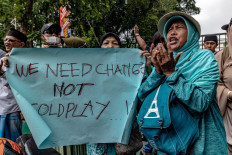
The dangerous labeling of LGBTQ as a threat to national defense
By branding LGBTQ culture as a national security threat, Indonesia's new defense regulation triggers a dangerous constitutional contradiction that undermines the very human rights the state is sworn to protect.

Society 2 months ago
PREMIUM
Anti-LGBTQ regulation fuels fears of criminalization
A presidential regulation classifying "LGBTQ culture” as a nonmilitary threat has drawn sharp criticism from civil society groups, who warn it could provide legal and political justification for further criminalizing the vulnerable minority, while lawmakers and religious groups defend the policy as necessary to “safeguard” national resilience.
Academia 6 months ago
PREMIUM
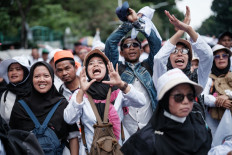
Making human rights due diligence work for social justice in Indonesia
To turn a paper tiger into a genuine catalyst for social justice, Indonesia must move beyond voluntary pledges and adopt a supported mandate that balances global trade demands with the practical needs of local businesses and workers.

Academia 6 months ago
PREMIUM
The gavel, not the gun: Rethinking TNI’s role in counterterrorism
As Indonesia deliberates the military’s role in domestic security, the priority must remain the preservation of the criminal justice system over purely kinetic solutions. Effective counterterrorism is measured not by the neutralization of threats, but by the state’s ability to uphold legal accountability under civilian oversight.
Politics 8 months ago
PREMIUM
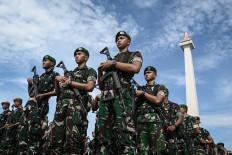
Plan to expand military role in counterterrorism draws flak
A draft Presidential Regulation (Perpres) lays out the military’s responsibilities in combating terrorism, including three roles for the Indonesian Military (TNI), which activists argue should be mainly carried out by civilian institutions such as the National Counterterrorism Agency (BNPT).


Regulations 3 years ago
PREMIUM
New rule on renewables pricing paves way for ‘greener’ EVs, NRE investment
Presidential Regulation No. 112/2022 is expected to help EVs become cleaner as it stipulates the early retirement of coal-fired power plants and provides a “relatively good” pricing scheme for electricity generated from renewables, making NRE projects more appealing to investors.

Editor's Picks
Popular
- Malaysia must not breathe Indonesia’s governance failure
- Mass poisonings cast doubt on free meals reforms
- New data rules could unlock cross-border data flows
- The state's new muscle
- Jakarta airport and others reopen after volcanic ash crisis
- Anak Krakatau eruption halts flights, schools, fishing
- Soekarno-Hatta airport extends closure after Anak Krakatau eruption
- Barelang Police, Japanese diplomat hold meeting on Batam security
- Travelers scramble as Anak Krakatau ash exposes gaps in contingency plans
- Jakarta international airport extends closure after Anak Krakatau eruption


