The Jakarta Post
Please Update your browser
Your browser is out of date, and may not be compatible with our website. A list of the most popular web browsers can be found below.
Just click on the icons to get to the download page.


Popular Reads
Top Results
No results found. Please check your search term and try again
Can't find what you're looking for?
View all search results
Popular Reads
Top Results
No results found. Please check your search term and try again
Can't find what you're looking for?
View all search resultssustainable
Companies 1 year ago
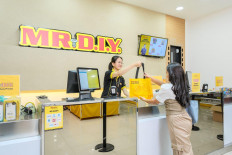
MR.D.I.Y. Indonesia sustains expansion, delivering 205.6% net profit growth in 2024
MR.D.I.Y. Indonesia has reported a strong financial performance for the year 2024, delivering net profit growth of 205.6 percent year on year (yoy), amounting to Rp 1.1 trillion, outpacing revenue growth of 73.9 percent yoy to Rp 6.8 trillion.

Food 1 year ago
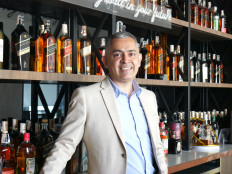
RE:HARVEST and partners transforms food waste into Sustainable Opportunity
South Korean start-up RE:HARVEST, in collaboration with P4G (Partnering for Green Growth and the Global Goals), ASEIC (ASEM SMEs Eco-Innovation Center) and leading beverage producer PT Multi Bintang Indonesia Tbk, hosted a Food Upcycling Seminar on Feb. 14-15 in Menteng, Central Jakarta, with an aim to advance sustainable food practices and reduce food waste.
Companies 1 year ago
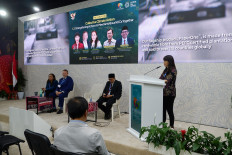
Sustainable business innovations key to accelerating Indonesia’s NDC targets: APRIL Group
The private sector plays a strategic role in accelerating efforts to achieve the targets of Indonesia's Nationally Determined Contribution (NDC), through the implementation of sustainable business principles with a focus on innovation to reduce carbon emissions.
Companies 1 year ago
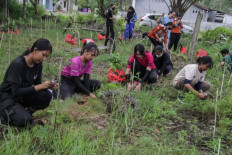
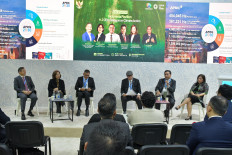
APRIL Group underlines commitment to sustainable production, forest management at COP29
Riau-based sustainable pulp and paper producer APRIL Group has reaffirmed its commitment to sustainable production and forest management at the 29th United Nations Climate Change Conference (COP29) in Baku, Azerbaijan.

Front Row 1 year ago
From root to leaf, Kubu shows the true meaning behind sustainable culinary feasts
Today, more people are paying attention not only to what they eat, but also how they can contribute to the Earth as the top of the food chain. For humans, a vital part of the culinary sector is to ensure the least amount of food waste.
Front Row 1 year ago
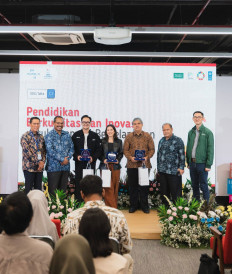
SDG Talks: Sustainable economy for Golden Indonesia 2045
A sustainable economy is a key pillar in the development of a nation. This concept emphasizes economic growth that does not harm the environment, preserves natural resources and ensures long-term social welfare. In addition, a sustainable economy strives to ensure that future generations can meet their needs. This idea aligns with achieving Sustainable Development Goals (SDGs) numbers four (quality education), eight (economic growth) and nine (industry, innovation and infrastructure).

Front Row 2 years ago
ELEMENTIS pioneers future of sustainable living, wellness
Through its world-first climate-responsive technology, innovative construction and next-generation wellness, ELEMENTIS Development Group is revolutionizing luxury living guided by its four core values of Wellness, Nature, Innovation and Community.
Editor's Picks
Popular
- Not the Ministry of Magic
- PISA gains belie Indonesia’s persistent education crisis
- The benefit of the doubt has expired
- Suahasil seen to prioritize fiscal discipline, continuity
- Osama the gamer: A list of Bin Laden’s video games from his hard drive
- Saudi civil defense sends all-clear after alerts issued for capital Riyadh
- Indonesian Navy welcomes former Italian warship as its first aircraft carrier
- Prabowo skips UNGA as RI seeks to bridge divides
- Another 150 Indonesians deported from Malaysia to Batam
- Ed Sheeran struggles against Gaza tide


