TheJakartaPost
Please Update your browser
Your browser is out of date, and may not be compatible with our website. A list of the most popular web browsers can be found below.
Just click on the icons to get to the download page.


Popular Reads
Top Results
No results found. Please check your search term and try again
Can't find what you're looking for?
View all search results
Popular Reads
Top Results
No results found. Please check your search term and try again
Can't find what you're looking for?
View all search results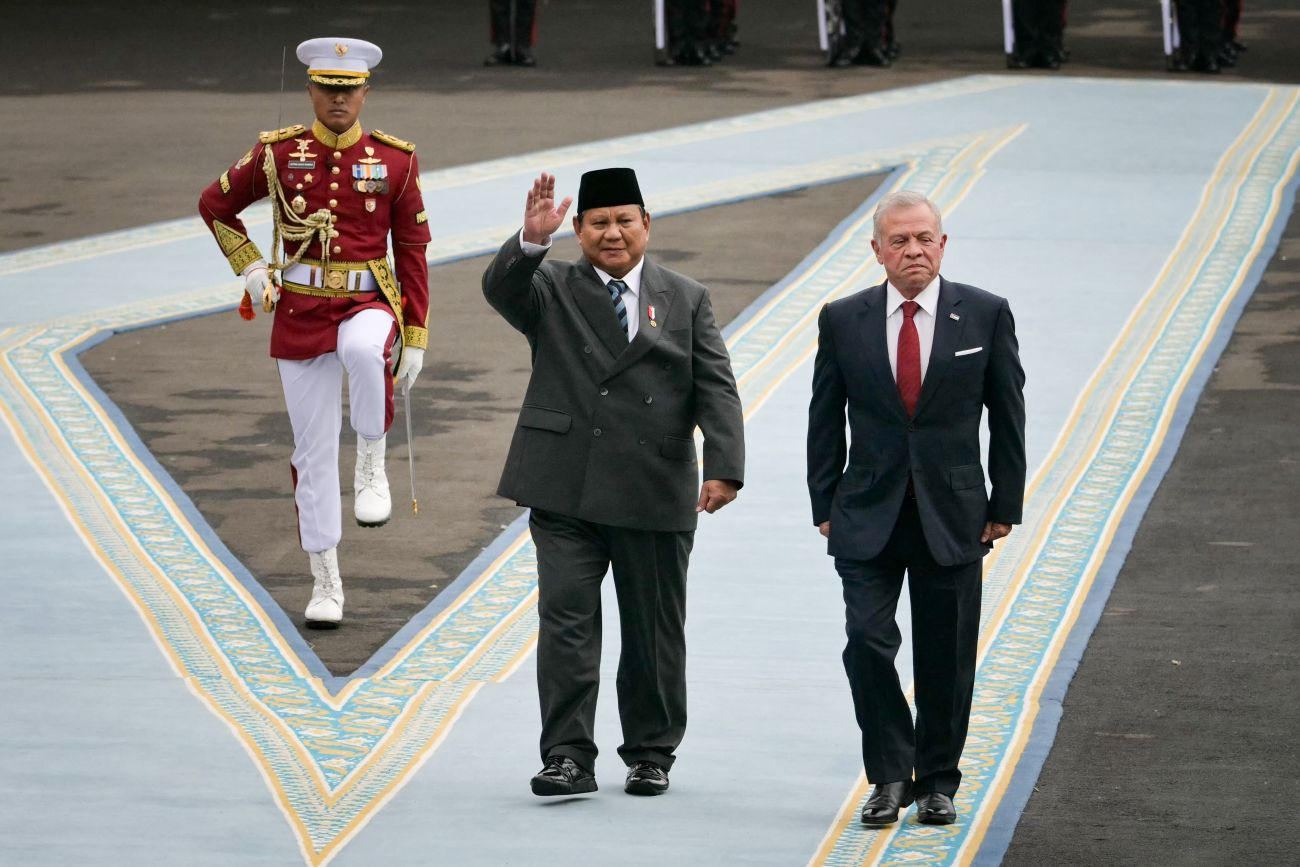
Academia
premium
Indonesia–Jordan ties: Strategic partners for peace, stability and resilient Indo-Pacific
Indonesia and Jordan strengthen relationships as they bid to maintain regional stability amid intensifying major-power competition, safeguard sovereignty and promote peace and justice.
3 months ago
Opinion
premium
Analysis: Indonesia moves toward rupiah redenomination during stable period
The Indonesian government and Bank Indonesia (BI) have once again floated the possibility of redenominating the rupiah. The proposal aims to enhance economic efficiency, stabilize the currency's exchange rate, strengthen public confidence in the rupiah and maintain purchasing power. Critics, however, argue that the initiative risks diverting government resources from more substantive economic ...
3 months ago
Academia
premium
Redefining protection: Investing in a community-led forest economy
Despite millions of dollars poured into climate action, only a small fraction reaches the communities that have kept their forests standing for generations. ...
3 months agoThe Latest
Editorial
premium
Justice for ‘Tempo’, a victory for the press
Media institutions in the country face increasing intimidation, not only from state actors but also from powerful business figures, as in the case of Tempo.
3 months ago
Academia
What teenagers want adults to know about their digital lives
Contrary to what adults might expect, young people want adults to know and care about their online lives.
3 months ago
Academia
Hasina’s conviction comes as lesson for all authoritarian rulers
Ultimately, the coercive power of the state could not withstand the power of the people.
3 months ago
Academia
premium
Green democracy is the path forward
When democracy can’t protect the people most affected, it stops being democracy.
3 months ago
Academia
premium
Regulation on carbon value: Another season of red tape?
Indonesia, with its potential to generate up to 13.4 billion tonnes of tradable carbon credits by 2050, is not yet the center of the carbon trade.
3 months ago
Academia
premium
Liquidity trap, confidence crisis amid monetary abundance
Japan’s Lost Decade offers a sobering lesson. The country suffered not from a lack of money, but from a collapse in growth expectations.
3 months ago
Academia
premium
A 70-year spirit of growth: From Bandung to Johannesburg
Ahead of the G20 presidency's impending handover to the United States, followed by other Global North economies over the next three years, the Johannesburg summit marks a turning point in sustaining the multilateral order.
3 months ago
Opinion
premium
Analysis: Cracks in Jokowi's dynasty follow legal, political setbacks
Former president Joko "Jokowi" Widodo is struggling to maintain his political clout in Indonesia. The prolonged controversy surrounding his academic certificate has eroded his credibility, while his clan, once expected to carry on his political legacy, has sought every path to establish meaningful influence. Instead, many of Jokowi's close allies have become entangled in legal troubles, and his sway within President Prabowo Subianto's administration is steadily fading.
3 months ago
Editorial
premium
House of hypocrisy
The amended Criminal Law Procedures Code (KUHAP) should be challenged at the Constitutional Court as it expands the police’s authority regarding preliminary investigations, detention, search and seizure, and wiretapping, which is prone to abuse.
3 months ago
Academia
premium
Innovation, not mandates, will shape our climate future
World leaders need to focus on technological innovations that will help pull developing countries out of the massive amount of carbon they emit, away from costly investments prioritizing carbon reductions by rich countries, which contribute just 13 percent of global emissions.
4 months ago
Academia
How India and Bangladesh are reinforcing each other’s extremes
South Asia needs an honest reckoning with the dangerous symmetry that has emerged across its borders.
4 months ago
Academia
premium
Insurgency, control dynamics reshape Rohingya crisis
As the Bay of Bengal monsoon season ends, increasing numbers of Rohingya boat journeys are imminent.
4 months ago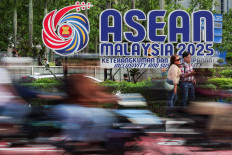
Academia
premium
ASEAN’s 2045 Vision, powered by technology transformation
The regional bloc is applying its inclusive, collaborative and people-centered approach to harness the growing power and reach of AI to ensure that the technology is wielded as an equalizing, unifying force for better lives across Southeast Asia.
4 months ago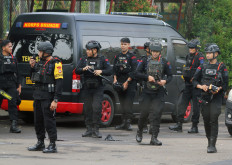
Academia
premium
Child bomb maker: A wake-up call for protection, not punishment
Around the world, minors have been pulled into extremist violence through a combination of online influence, emotional turbulence, and unmet social needs.
4 months ago
Academia
premium
Sukarno, Soeharto and authoritarian failures in Indonesia
Centralization, which is prone to authoritarianism, may serve as an emergency structure in moments of collapse, but it cannot drive innovation, productivity or global competitiveness.
4 months ago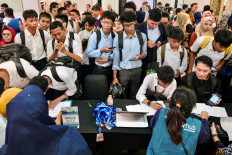
Opinion
premium
Analysis: Jobless in a growing economy
Indonesia's economy expanded by a modest 5.04 percent in the third quarter of 2025, adding 1.9 million new jobs over the past year. The government quickly celebrated the achievement, hailing it as proof that economic growth is reaching the people. Yet behind the upbeat headlines lies a deeper question: is this growth truly generating quality employment, or merely fueling the quiet expansion of the informal economy?
4 months ago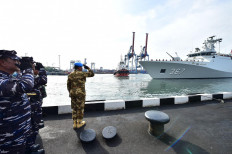
Editorial
premium
A dangerous peace mission
The mission to Gaza has a much wider scope that involves maintaining the precarious peace and ceasefire agreement, and includes the disarming Palestinian resistance groups.
4 months ago
Academia
premium
Climate and development finance must be integrated
Climate action and development is a false dichotomy, as investing in one necessarily contributes to outcomes in the other, and the global financial architecture needs to reflect this reality through an integrated mechanism that delivers, especially for developing countries.
4 months ago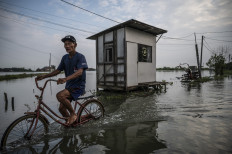
Academia
premium
Urgent call to turn the tide on coastal displacement
It is time for Indonesia to turn the table at the COP30 climate talks and take leadership in global discussion on displacement of coastal communities.
4 months ago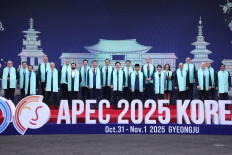
Academia
premium
Leveraging ASEAN, APEC 2025 outcomes to accelerate economic growth
Despite Indonesia’s strong regional position, this growth framework is shared by all economies in the region and each pursuing it for their own prosperity. Indonesia must act now to seize opportunities.
4 months ago
Academia
premium
The national hero title for Soeharto: A monument to impunity
The granting of the hero title to Soeharto represents a denial, if not an outright betrayal, of the Reform movement, which was initiated in 1998 to end his corrupt dictatorship.
4 months ago
Academia
premium
‘Turn back cops’: Reform guided by generals of the past
Prabowo's direction will determine whether the reform team proves or disproves policing scholarship, which indicates that true reform depends on an external approach.
4 months ago
Opinion
premium
Analysis: Riau politicians' penchant for old-fashioned corruption
Despite the rise in graft scandals over the past year, a recent sting operation by the Corruption Eradication Committee (KPK) in Riau signals that systemic corruption in the country is showing no sign of slowing down.
4 months ago
Editorial
premium
Another cop-out at COP
Indonesia has demonstrated an inadequate commitment to cutting greenhouse gas emissions in its latest nationally determined contribution (NDC), which shows it will remain dependent on fossil fuels.
4 months ago
Academia
Indonesia’s geothermal governance must empower locals
Giving local governments more autonomy and prioritizing human rights are key to advancing Indonesia’s renewable energy aims.
4 months ago
Academia
premium
ASEAN strengthens southern solidarity
Recent ASEAN summits marked an important point in the bloc’s efforts to navigate its own way in the global system, reinforcing its internal cohesion and developing an outward-looking agenda.
4 months ago
Academia
premium
Why Indonesia’s EV future must be different: Lessons from Norway
Oslo's model shows that streamlined regulatory and incentive policies can help propel market evolution toward an EV ecosystem, while a separate study shows that vehicle electrification doesn't necessary require nickel or the resulting social and environmental harms.
4 months agoPopular
- Govt mulls lifting deficit cap amid high oil price
- A cowardly attack
- Iran fires missiles at Qatar and Saudi energy facilities
- Activists defiant following acid attack on rights defender
- Before Iran and Venezuela, there was Indonesia
- ‘Mudik’ flow peaks two days ahead of Idul Fitri, say police
- Land rights controversy hurts palm oil investment
- Djarum owner Michael Hartono dies at 86
- Prabowo, Megawati holds closed-door discussion on geopolitics
- Indonesia puts off ratifying ART as US opens trade probes