The Jakarta Post
Please Update your browser
Your browser is out of date, and may not be compatible with our website. A list of the most popular web browsers can be found below.
Just click on the icons to get to the download page.


Popular Reads
Top Results
No results found. Please check your search term and try again
Can't find what you're looking for?
View all search results
Popular Reads
Top Results
No results found. Please check your search term and try again
Can't find what you're looking for?
View all search resultsbi

Markets 08:00 pm
PREMIUM
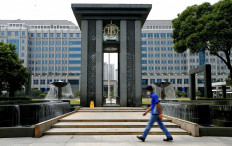
External pressure, fiscal risks weigh on rupiah
The rupiah has again breached a psychological threshold against the United States dollar as fading hope for a swift settlement of the Iran war pushes up global energy prices and inflation in Indonesia, triggering fresh capital outflows from Indonesia.
Opinion 07:00 am
PREMIUM
Analysis: Everything but the rate: BI balances growth, rupiah stability
Bank Indonesia (BI) opted to keep monetary policy supportive of growth on Sept. 23, holding its benchmark rate at 5.75 percent despite the United States Federal Reserve’s rate hike a week earlier. The decision, Governor Destry Damayanti’s second consecutive hold, reflects BI’s expanded mandate to support economic growth and job creation. Rather than raising rates to defend the rupiah, BI strengthened incentives for investors to hedge their currency exposure, seeking to balance growth with exchange-rate stability.


Opinion 2 weeks ago
PREMIUM
Analysis: Destry’s balancing act: Growth, stability, BI independence
Destry Damayanti has officially been appointed as the new Bank Indonesia (BI) governor, taking on the responsibility of navigating not only monetary policy challenges stemming from global instability and domestic economic pressures, but also a growing institutional challenge under President Prabowo Subianto’s administration. The revision of the Financial Sector Development and Strengthening Law (UU P2SK) has expanded BI’s mandate toward supporting economic growth alongside maintaining rupiah stability. This raises questions over the central bank’s autonomy as a monetary authority, as greater state influence and stronger fiscal policy priorities could constrain Destry’s ability to respond effectively to exchange rate and inflation pressures.

Regulations 1 month ago
PREMIUM
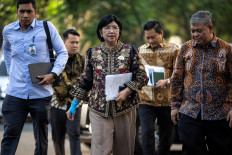
Destry promises 'same soul' at BI should she get the job
In a vetting process at the House of Representatives, Bank Indonesia (BI) governor nominee Destry Damayanti signaled continuity in monetary policy but emphasized a commitment to pushing economic growth should she be approved for the top job at the central bank.


Editor's Picks
Popular
- Popular discontent is justified. Authoritarianism is not the answer
- Recentralization concerns in fiscal, education heighten
- Sugarcane farmers query House over sugar imports
- Govt under pressure as 3 million home drive hits cracks
- Safeguarding Indonesia's AI future
- Power exports to Singapore hinge on regulatory clarity
- Thousands huddle in Bangkok shelters as Thai flood damages seen at $320m
- Prabowo turns to experts to tackle peatland fires after swipe at researchers
- Stocks plunge as IDX lowers minimum price cap
- Palestine test for UN ‘resilience’, says Indonesia


