The Jakarta Post
Please Update your browser
Your browser is out of date, and may not be compatible with our website. A list of the most popular web browsers can be found below.
Just click on the icons to get to the download page.


Popular Reads
Top Results
No results found. Please check your search term and try again
Can't find what you're looking for?
View all search results
Popular Reads
Top Results
No results found. Please check your search term and try again
Can't find what you're looking for?
View all search resultsreform
Politics 1 month ago
PREMIUM
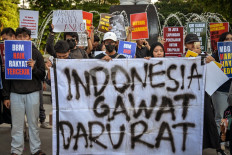
Calls for reform grow ahead of Prabowo’s state address
Intellectuals call for the government to restore the independence of key state institutions to support the rule of law and end misallocation of state funds for initiatives including President Prabowo Subianto’s flagship programs.


Opinion 2 months ago
PREMIUM
Analysis: SOE governance reform faces a major test at Pos Indonesia
Pos Indonesia, the country's oldest state-owned enterprise (SOE), has come under renewed scrutiny following the resignation of its president director, Daud Joseph, after only three months in office. His departure was followed by allegations of governance irregularities, including suspected manipulation of the company's financial statements, prompting state asset fund Danantara to launch an audit. The episode underscores the persistent weaknesses in SOE governance that have contributed to the sector's underperformance for years.



Academia 2 months ago
PREMIUM
Justice at the barrel of a gun: The anticlimax of antigraft policy
When institutional rivalries push heavily armed soldiers to negotiate the return of seized evidence, Indonesia faces a critical choice: uphold the civilian rule of law or allow justice to be dictated by the barrel of a gun.
Academia 2 months ago
PREMIUM
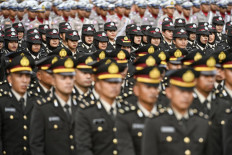
Symbolic parade, state violence and contraction of civic space
Behind the grand spectacle of the 80th National Police anniversary, the force faces growing scrutiny over a stark, documented rise in state-sanctioned violence and civic repression. As new legislative frameworks expand police powers while dismantling oversight, the line between public security and political instrumentalization is blurring dangerously.

Academia 2 months ago
PREMIUM
BGN graft case shows police accountability reform cannot wait
The shocking graft scandal within the National Nutrition Agency is a stark warning that good intentions cannot survive without robust oversight. If the president’s flagship welfare program can be so easily compromised, Indonesia’s heavily funded, opaque National Police force cannot afford to wait any longer for deep financial and structural reform.

Editor's Picks
Popular
- Popular discontent is justified. Authoritarianism is not the answer
- Recentralization concerns in fiscal, education heighten
- Govt under pressure as 3 million home drive hits cracks
- Safeguarding Indonesia's AI future
- Sugarcane farmers query House over sugar imports
- Power exports to Singapore hinge on regulatory clarity
- Thousands huddle in Bangkok shelters as Thai flood damages seen at $320m
- Prabowo turns to experts to tackle peatland fires after swipe at researchers
- Palestine test for UN ‘resilience’, says Indonesia
- Oil prices spike after Trump rejects Iran truce offer


