The Jakarta Post
Please Update your browser
Your browser is out of date, and may not be compatible with our website. A list of the most popular web browsers can be found below.
Just click on the icons to get to the download page.


Popular Reads
Top Results
No results found. Please check your search term and try again
Can't find what you're looking for?
View all search results
Popular Reads
Top Results
No results found. Please check your search term and try again
Can't find what you're looking for?
View all search resultsdisaster

Academia 1 day ago
PREMIUM
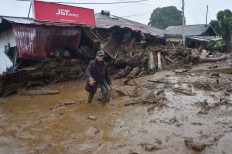
When citizens demand accountability for forest fires
As toxic smoke returns to West Kalimantan, a landmark class action is putting Indonesia's environmental governance on trial, testing whether citizens can legally force the state to protect them from preventable disaster.

Opinion 1 week ago
PREMIUM
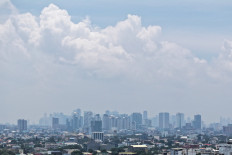
Analysis: Indonesia’s disaster budget faces a cost-benefit test
Indonesia faces an unfortunate fiscal paradox: Just as the government has cut disaster-mitigation funding to the bone, disasters have struck with unforgiving regularity. President Prabowo Subianto himself has acknowledged that disasters are part and parcel of life in the archipelago. Yet his administration has slashed the National Disaster Mitigation Agency’s (BNPB) budget to just Rp 491 billion (US$28 million) this year, raising a fundamental question: How much can Indonesia afford to save on preparing for disasters?

Politics 1 week ago
Indonesian Navy welcomes former Italian warship as its first aircraft carrier
The former Italian carrier Giuseppe Garibaldi docked at a port in Jakarta after sailing from Italy via Colombo and the Malacca strait, Indonesian Navy Chief of Staff Admiral Muhammad Ali told reporters.
Jakarta 1 week ago
PREMIUM
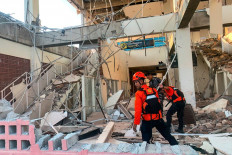
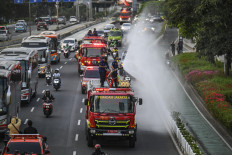
Jakarta quick fixes become rare bright spot amid disasters, government shortcomings
As criticism mounts over the central government’s responses to disasters across Indonesia, Jakarta’s perceived responsiveness to everyday concerns has emerged as an unlikely bright spot in the public eye.
Editorial 2 weeks ago
PREMIUM
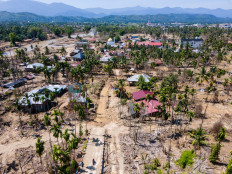
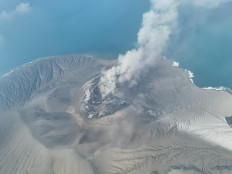
Living on the edge
When the volcano exploded on Aug. 27, 1883, it destroyed the island on which it stood, killed almost 40,000 people in the surrounding area of Java and Sumatra, sent rafts of pumice to Africa, covered the Red Sea in ash and made barometers as far away as Washington, DC go haywire.
Editor's Picks
Popular
- Batam residents protest data centers amid water crisis
- Recentralization concerns in fiscal, education heighten
- Govt under pressure as 3 million home drive hits cracks
- Popular discontent is justified. Authoritarianism is not the answer
- Safeguarding Indonesia's AI future
- Prabowo’s universal free education plan raises feasibility questions
- The Jakarta Post: Indonesia & World Breaking News
- Free meals marketplace raises supply chain concerns
- Rocking the boat in a storm
- The Jakarta Post: Indonesia & World Breaking News


