The Jakarta Post
Please Update your browser
Your browser is out of date, and may not be compatible with our website. A list of the most popular web browsers can be found below.
Just click on the icons to get to the download page.


Popular Reads
Top Results
No results found. Please check your search term and try again
Can't find what you're looking for?
View all search results
Popular Reads
Top Results
No results found. Please check your search term and try again
Can't find what you're looking for?
View all search resultspolicy


Academia 3 months ago
PREMIUM
Indonesia plans for where people sleep, not where they live their day
As the administrative boundaries of Indonesia's urban areas blur, millions of people are having to pay a silent "metropolitan tax" that is measured not in currency but in hours of their lives surrendered to daily commutes.

Opinion 3 months ago
PREMIUM
Analysis: Bank Indonesia faces a growing policy paradox
Bank Indonesia’s decision to raise its benchmark BI Rate by 50 basis points to 5.25 percent marks a clear shift from supporting growth to defending macroeconomic stability as the rupiah comes under pressure. But the move also exposes a deeper dilemma: The central bank must stabilize the currency while sustaining growth, even as expansive fiscal intervention weakens monetary policy effectiveness and raises questions over its independence.



Opinion 4 months ago
PREMIUM
Analysis: An economy that isn’t hiring: Why policy is failing the labor market
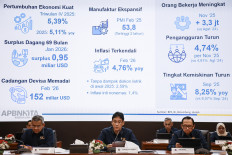
The job creation engine is showing signs of strain. Despite steady economic growth and rising investment, businesses are increasingly reluctant to expand their workforce, raising concerns over the economy’s ability to absorb millions of new job seekers each year. The emerging disconnect between growth and employment is no longer cyclical but structural, pointing to deeper challenges in how investment, labor policy and skills development are aligned.

Editor's Picks
Popular
- PISA gains belie Indonesia’s persistent education crisis
- Not the Ministry of Magic
- Suahasil seen to prioritize fiscal discipline, continuity
- The benefit of the doubt has expired
- Saudi-led coalition says Houthis fired ballistic missile at Riyadh
- 3% deficit cap revision puts Indonesia’s fiscal credibility at risk
- Osama the gamer: A list of Bin Laden’s video games from his hard drive
- Court decision tightens House oversight on free meals funding
- Police probe kidnapping, murder of Ukrainian tourist in Bali
- Hundreds of flights cancelled as Typhoon Dujuan nears Japan


