Analytical Commentary by Tenggara Strategics
Please Update your browser
Your browser is out of date, and may not be compatible with our website. A list of the most popular web browsers can be found below.
Just click on the icons to get to the download page.


Popular Reads
Top Results
No results found. Please check your search term and try again
Can't find what you're looking for?
View all search results
Popular Reads
Top Results
No results found. Please check your search term and try again
Can't find what you're looking for?
View all search results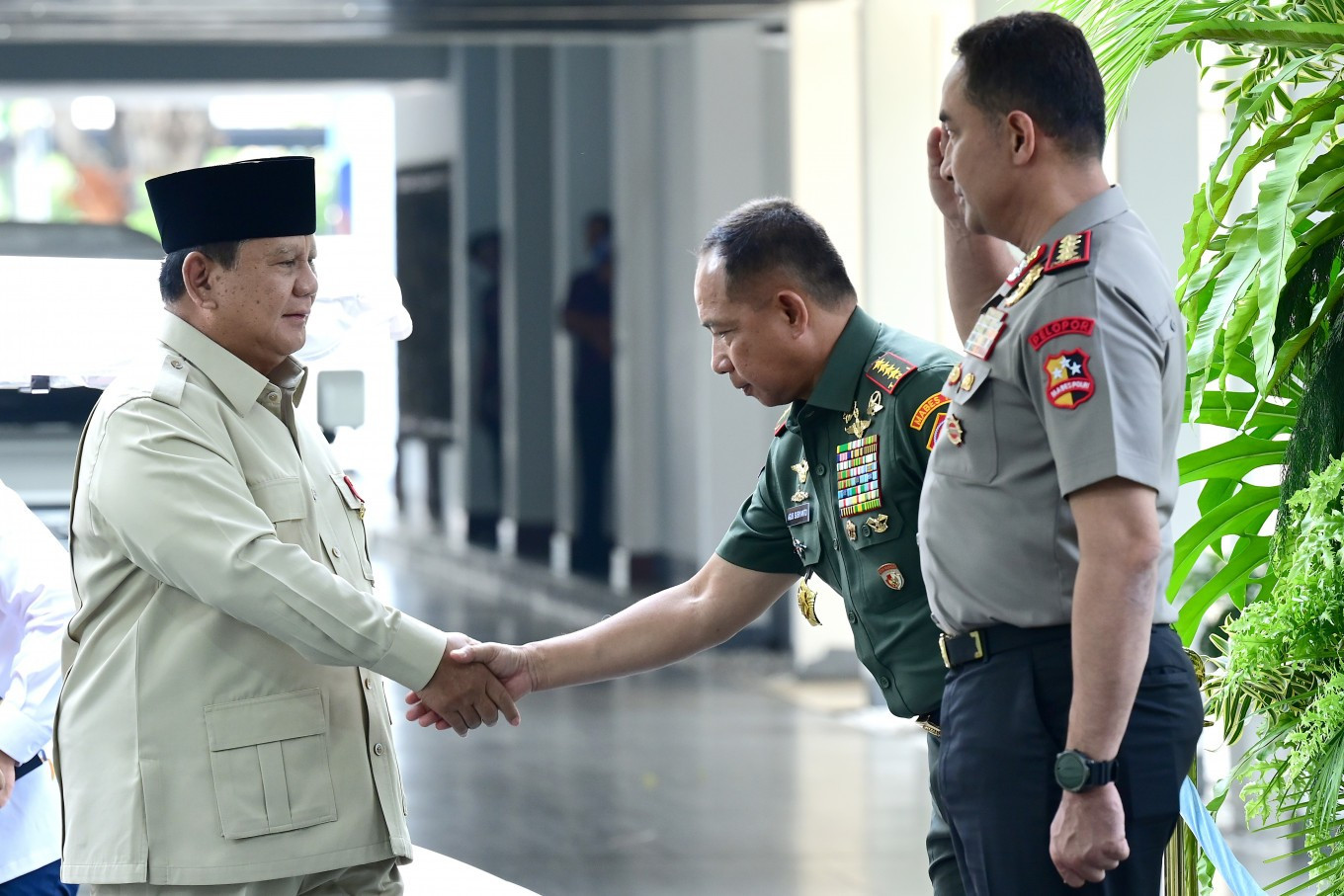
Opinion
premium
Analysis: Prabowo’s security shuffles: Lining up loyalists pre-2029
Nearly two years into his presidency, President Prabowo Subianto has moved decisively to tighten his grip on Indonesia’s two most powerful security institutions. A series of leadership changes at the National Police (Polri) and the Indonesian Military (TNI) this month have systematically reduced the residual influence of former president Joko “Jokowi” Widodo’s administration, realigning internal loyalties and strengthening presidential authority for the remainder of his term toward the 2029 elections.
15 hours ago
Opinion
premium
Analysis: A sugar excise too small to matter
A tax on sugar-sweetened beverages (SSB) is planned from the second half of 2027, the government has said, after making similar promises almost every year since 2022. The levy is expected to raise Rp 1.7 trillion (US$95 million), while diabetes care alone cost the national health insurance an estimated Rp 12.6 trillion in 2024. At its planned scale, the proposed levy risks falling short as both a ...
2 days ago
Opinion
premium
Analysis: SOE IPOs face an uphill battle against historical pitfalls
State asset fund Danantara plans to take several state-owned enterprises (SOEs) public in 2027, but whether the listings will attract investor interest remains uncertain. The companies have yet to be identified, and Danantara has pledged to conduct rigorous reviews before determining which are ready to enter the stock market. The key question, however, is whether the selected companies can offer s...
3 days agoThe Latest
Opinion
premium
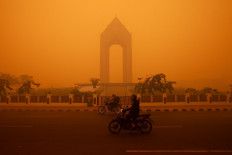
Analysis: Forest fires prove governance failures have gone too far
For nearly four months wildfires have ravaged Indonesia, exposing acute, systemic failures in government response and law enforcement. While the ongoing dry spell has exacerbated the crisis, suspected corporate land clearing by burning points to a deliberate, recurring practice that authorities have repeatedly failed to halt.
4 days ago
Opinion
premium
Analysis: BMRI’s bond issue: Himbara’s government financing under scrutiny
State-owned lender Bank Mandiri (BMRI) recently issued US$750 million in perpetual bonds, an uncommon instrument among Indonesian corporates, with an initial annual distribution rate of 7.35 percent. The issuance is intended to strengthen the bank’s capital base by bolstering its Additional Tier 1 (AT1) capital and supporting business expansion. However, it has also fuelled speculation that BMRI, along with other Himbara banks, may be facing mounting financial demands from their involvement in financing government programmes.
5 days ago
Opinion
premium
Analysis: Gibran won’t be impeached, but that’s not the point
The controversy surrounding Vice President Gibran Rakabuming Raka has entered a new phase. Criticism of how he reached office is increasingly channeled into talk of impeachment. Paradoxically, the more it is discussed, the less likely it seems to happen. The mechanism exists, but the politics suggest its impact will be symbolic rather than institutional.
6 days ago
Opinion
premium
Analysis: Who pays when Indonesia’s tax ambitions fall short?
With three months left in the year, Indonesia has collected barely two-thirds of its annual tax target. The government now faces an uncomfortable choice over how aggressively to pursue the remainder and where to restrain spending. Every effort to balance the books carries consequences for businesses and people who depend on public services. Who will bear the cost if the government's revenue ambitions exceed its capacity to collect?
1 week ago
Opinion
premium
Analysis: Indonesia's textile rescue: Revival or another failed SOE?
President Prabowo Subianto wants to revive Indonesia's struggling textile industry by establishing a new state-owned enterprise (SOE), potentially drawing on assets left behind by bankrupt textile giant Sritex. The plan comes amid factory closures, mass layoffs and mounting competition from cheaper imports. But with much of the industry's production capacity already underutilized, the government faces a difficult question: Will another state-owned company restore the industry's competitiveness or merely add to its problems?
1 week ago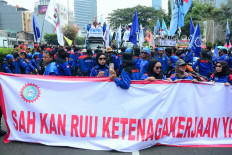
Opinion
premium
Analysis: Will Indonesia’s new labor law deliver on its promises?
The new Labor Protection Law, approved by the House of Representatives on Oct. 6, promises stronger severance entitlements, tighter dismissal rules and greater employment security. But stronger legal protections mean little if employers circumvent restrictions on temporary employment or fail to pay compensation. The real test of the new law lies not in its promises but in whether its provisions translate into effective protection for workers when their livelihoods are most vulnerable.
1 week ago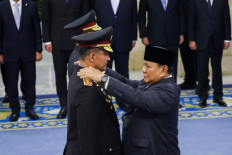
Opinion
premium
Analysis: Same uniform, new master: The limits of police reform
The inauguration of Suyudi Ario Seto as the new National Police (Polri) chief should be a chance to ask whether Polri can become a truly professional force. The early signals suggest it will not.
1 week ago
Opinion
premium
Analysis: Can Hashim’s group succeed in Indonesia’s toughest gas block?
PT Nations Petroleum, an oil and gas company linked to businessman Hashim Djojohadikusumo, President Prabowo Subianto’s younger brother and special climate and energy envoy, has committed US$103.3 million to three years of work on the Natuna D-Alpha block, prompting questions over why the relatively new player is willing to take on such an ambitious bet.
1 week ago
Opinion
premium
Analysis: Court decision lets Gibran’s questionable diploma slide
The latest ruling by the Constitutional Court has raised far more questions than it has answered regarding the educational qualifications of Vice President Gibran Rakabuming Raka.
1 week ago
Opinion
premium
Analysis: Bahlil takes on new role, questions remain over its purpose
Bahlil Lahadalia’s latest appointment as coordinating downstream and energy transition minister gives him an unusually broad mandate, as he will also retain his position as energy and mineral resources minister, though the scope of the newly established coordinating ministerial post is yet to be clearly defined in terms of authority and jurisdiction. The arrangement seems to be in line with the government’s continuing prioritization of downstream industrial development, but raises a central question: Will the new post improve coordination on Indonesia’s downstream and energy transition agenda or simply add another layer of bureaucracy?
2 weeks ago
Opinion
premium
Analysis: The hidden costs of Indonesia’s data center gold rush
Indonesia wants to ride the global data center boom, betting that investment, skilled jobs and computing power for artificial intelligence will drive economic growth. But the cloud leaves its imprint on the ground: Data centers consume vast amounts of electricity and water and can expose surrounding communities to heat and noise. The question is whether the government will make this boom work for the public or leave communities to pay for it.
2 weeks ago
Opinion
premium
Analysis: Free education, but at what cost?
President Prabowo Subianto wants Indonesians to enjoy free education from kindergarten through university. Few would dispute the objective of making education more accessible. The harder question is how the government will pay for it. The state has yet to fully fund a Constitutional Court order to extend free compulsory basic education to private schools, even as Prabowo adds free university tuition to a budget already carrying increasingly expensive signature programs.
2 weeks ago
Opinion
premium
Analysis: SAL new rulebook: Where the money should go
The government has formally changed how it manages its budget surplus funds (SAL), ending a nearly year-long debate over how the roughly Rp 400 trillion (US$22.4 billion) in surplus funds should be managed and put to use. Under Finance Ministry Regulation (PMK) No. 67/2026, excess government cash can now be placed with commercial banks or invested in government securities (SBN), giving the Finance Ministry greater flexibility in managing its cash.
2 weeks ago
Opinion
premium
Analysis: KRL import stopgap highlights INKA’s deeper problems
The decision by PT Kereta Api Indonesia (KAI) to recall several electric trains produced by PT Industri Kereta Api (INKA) for its Commuter Line service adds to the challenges facing the state-owned rolling stock manufacturer, which is struggling with high debt and production constraints amid a planned merger with KAI. Meanwhile, government approval to import secondhand rolling stock from Japan provides a short-term solution to KAI’s train shortage. Such reliance on imports could persist unless INKA’s production capacity and the domestic rolling stock supply chain are strengthened.
2 weeks ago
Opinion
premium
Analysis: Equality before the law ends inside prison cells
Indonesia has once again been forced to confront an uncomfortable question: What happens to the principle of equality before the law once the courtroom doors close?
3 weeks ago
Opinion
premium
Analysis: The threshold fight: What 5 percent debate means for 2029
The House of Representatives is entering its most consequential electoral reform since 2017. As Commission II drafts a new Election Law for 2029, the fault line is already clear: the legislative threshold.
3 weeks ago
Opinion
premium
Analysis: RI’s illegal cigarette trade A problem of enforcement and incentives
Indonesia's illegal cigarette trade has long deprived the state of revenue and undermined formal producers. Recent allegations that people linked to a House of Representatives legislator sold counterfeit excise stamps, however, suggest that illicit trade may also involve those with access to formal institutions. The case raises questions about how illegal cigarettes keep circulating through counterfeit branding, informal distribution and alleged collusion, even as authorities tighten enforcement and regulation.
3 weeks ago
Opinion
premium
Analysis: Land agency graft probe puts high-profile figures in spotlight
Indonesia has barely had time to digest one high-profile corruption scandal before another has breached the surface, this time striking at the heart of the country's land administration. The latest case centers on the Agrarian and Spatial Planning Ministry/National Land Agency (BPN). A sweeping bribery probe by the Corruption Eradication Commission (KPK) has ensnared senior bureaucrats, a prominent property developer and multiple operatives identified as close associates of minister Nusron Wahid, a Golkar politician.
3 weeks ago
Opinion
premium
Analysis: Indonesia’s tax revenue: Mirage or miracle
Indonesia’s economy has recently received a welcome piece of good news, with the latest state budget figures showing a sharp increase in tax revenue. Net tax revenue rose by a remarkable 24.1 percent year-on-year as of August 2026, reaching Rp 1.409 quadrillion (US$79 billion), or 59.8 percent of the full-year target. Finance Minister Suahasil Nazara attributed the increase to higher global oil and gas prices, strong domestic consumption and improvements in the Coretax system.
3 weeks ago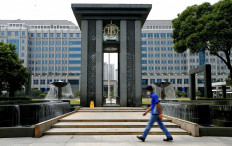
Opinion
premium
Analysis: Everything but the rate: BI balances growth, rupiah stability
Bank Indonesia (BI) opted to keep monetary policy supportive of growth on Sept. 23, holding its benchmark rate at 5.75 percent despite the United States Federal Reserve’s rate hike a week earlier. The decision, Governor Destry Damayanti’s second consecutive hold, reflects BI’s expanded mandate to support economic growth and job creation. Rather than raising rates to defend the rupiah, BI strengthened incentives for investors to hedge their currency exposure, seeking to balance growth with exchange-rate stability.
3 weeks ago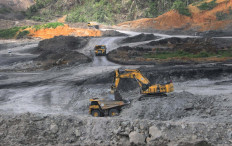
Opinion
premium
Analysis: Haji Isam’s Bayan deal lands, exposing coal mining’s risks
The proposed acquisition of a 30 percent stake in PT Bayan Resources (BYAN) by Jhonlin Baratama has entered a new phase after both parties signed a conditional sale and purchase agreement. The deal follows weeks of uncertainty over Bayan’s production quota, which had forced three of its subsidiaries to declare force majeure while awaiting approval of their revised 2026 mining work and budget plans (RKAB). The timing of the acquisition, Bayan’s force majeure declaration and the subsequent approval of its revised production quota raises questions about the role of regulatory intervention in corporate outcomes.
4 weeks ago
Opinion
premium
Analysis: For the sake of public safety, MBG should be put on hold
The government’s flagship free nutritious meal program is facing an escalating crisis of public confidence as recurring food-poisoning outbreaks sweep the country. Yet despite mounting casualties, growing demands for accountability and urgent calls for a moratorium, the government has shown no intention of pausing the rollout.
1 month ago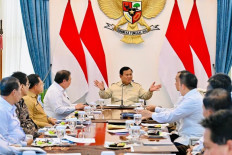
Opinion
premium
Analysis: 200 million accounts: Financial inclusion or fiscal excess?
The government’s plan to spend an estimated Rp 11 trillion (US$619 million) opening bank accounts for more than 200 million Indonesians aged 17 and above is difficult to justify when fiscal space is already tight and financial inclusion has reached 93.61 percent. If the objective is to reach the unbanked or improve the delivery of social assistance, there is little reason to give new accounts to almost every adult, including those already banked. Scarce public funds should be targeted at people who actually need them.
1 month ago
Opinion
premium
Analysis: Whoosh or noose: Uncertain future of high-speed rail project
Indonesia’s long-standing ambition to build a high-speed rail network has evolved from a national prestige project into a potential fiscal burden. Whoosh’s continuing losses and mounting debt have already drawn the Finance Ministry closer to backstopping the project. Given its history of delays, cost overruns and overly optimistic projections, the question is whether Whoosh can deliver sufficient economic benefits or become a noose around Indonesia’s already stretched fiscal capacity.
1 month ago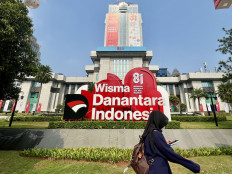
Opinion
premium
Analysis: Danantara, Finance Ministry clash over SOE dividends
The Finance Ministry and state asset fund Danantara are at odds over who controls dividends from state-owned enterprises (SOEs), exposing an unresolved question at the heart of Indonesia's new state-asset architecture. Before Danantara was created, SOE dividends were paid to the state and recorded as non-tax revenue. Under the new framework, Danantara manages the shares and assets transferred to it and can use returns from those assets for investment and capital injections. Part of its eventual profits is to be transferred to the state after provisions for investment risks and capital accumulation. The dispute therefore is not simply about whether the government can receive SOE dividends, but about when and through what mechanism those funds should reach the state budget.
1 month ago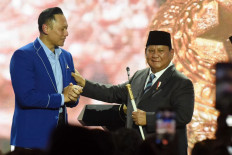
Opinion
premium
Analysis: Agus’ balancing act: Criticizing power without leaving it
Agus Harimurti Yudhoyono's recent political messaging can be interpreted as an attempt to achieve a delicate balancing act: positioning himself and the Democratic Party as a critical voice within government without crossing the line into outright opposition. It is a strategy born from both opportunity and necessity. For Agus, the political challenge is obvious. While he remains one of Indonesia's most recognizable younger politicians, he has not consistently appeared among the top-tier contenders in most discussions about the 2029 presidential election.
1 month ago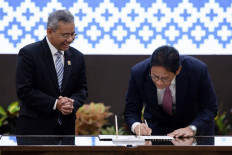
Opinion
premium
Analysis: Purbaya’s contentious tenure ends in internal clash
Purbaya Yudhi Sadewa was removed as finance minister after just over a year in office, marking the second time President Prabowo Subianto has replaced the country’s finance minister in less than two years. Prabowo appointed former deputy finance minister Suahasil Nazara to replace him, making Suahasil the third person to hold the position since Prabowo took office. The abrupt change followed months of contentious reforms, fiscal policies and plans that increasingly brought Purbaya into conflict with officials within the Finance Ministry and with other institutions.
1 month agoPopular
- Prabowo begins third year with tighter grip as public support slips
- Power for the people
- MSCI warning triggered ‘manageable’ outflow from bond market, BI reveals
- How worried should we be about the global economy?
- Indonesia cuts gas exports to Singapore
- Jakarta should not lower the bar for Myanmar
- Indonesia, Singapore at odds as gas export cut raises energy concerns
- ‘Panic’ blamed for record foreign outflows from stock market
- Indonesia's gas export cuts: A costly blow to trust and regional leadership
- Students protest Central Kalimantan haze