TheJakartaPost
Please Update your browser
Your browser is out of date, and may not be compatible with our website. A list of the most popular web browsers can be found below.
Just click on the icons to get to the download page.


Popular Reads
Top Results
No results found. Please check your search term and try again
Can't find what you're looking for?
View all search results
Popular Reads
Top Results
No results found. Please check your search term and try again
Can't find what you're looking for?
View all search results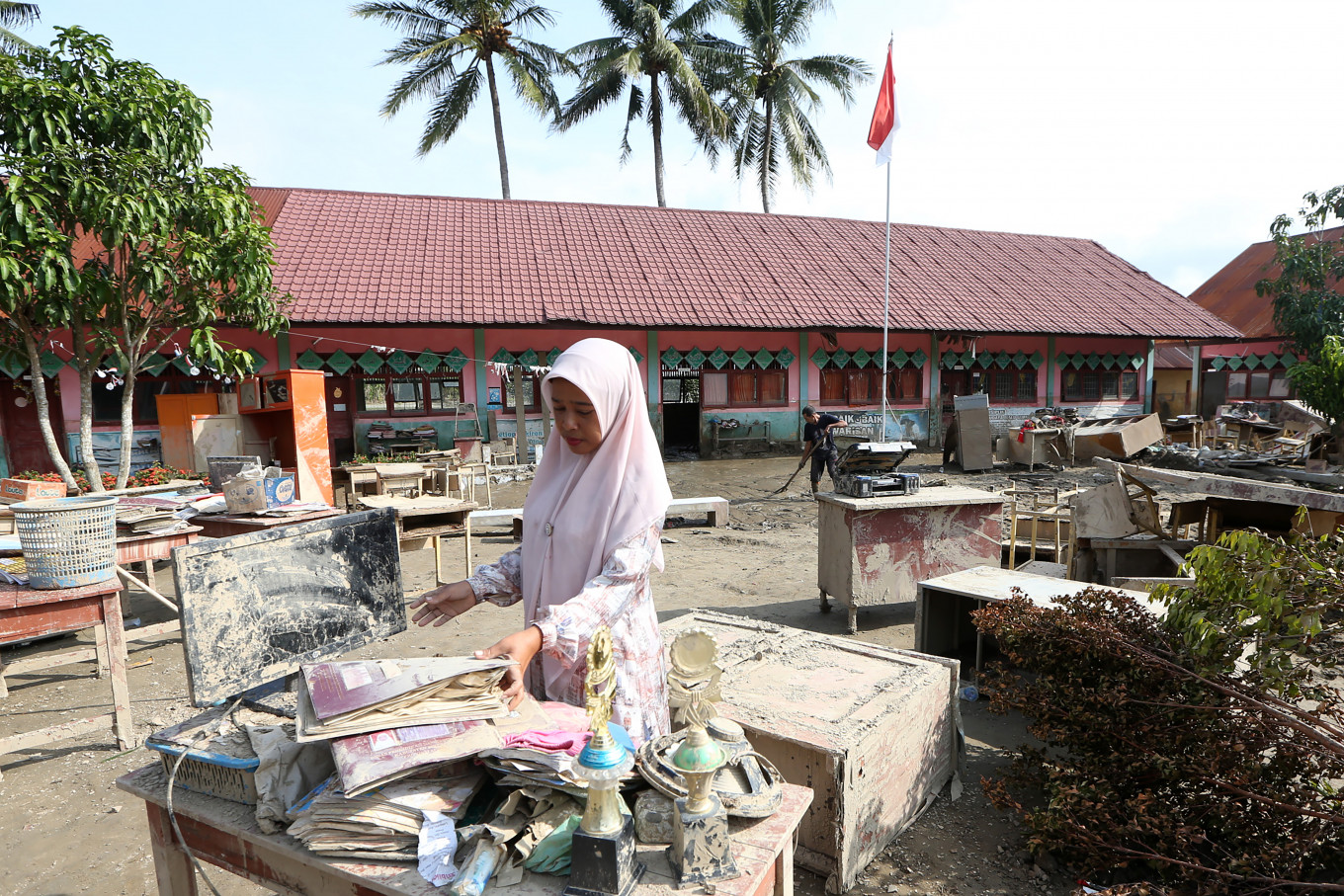
Academia
premium
Mainstreaming ecological democracy: Challenges and opportunities
Eco-democracy seeks to create harmony between humanity and the environment, positioning ecological health as a core component of democratic rights and a vital alternative to the laissez-faire economic models.
1 month ago
Opinion
premium
Analysis: Food estate dream in South Papua grows bigger, more destructive
The country’s long-running food estate ambition is entering a new and larger phase with the conversion of vast forest areas in South Papua into non-forest zones, or areas for other uses (APL). Initially framed as a strategy to achieve rice self-sufficiency, the program has now expanded under President Prabowo Subianto to also pursue energy security, with palm oil positioned as a key commodit...
1 month ago
Editorial
premium
Markets don’t lie
While such a neo-statist development approach is within the global zeitgeist, there seems to be doubt about it working in this country. ...
1 month agoThe Latest
Academia
premium
Russian diplomacy in an emerging multipolar world
Russian diplomacy will continue to focus on deepening a trust-based dialogue with Indonesia and other ASEAN member states, grounded in respect for international law, mutual interests, the principles of consensus, and noninterference in internal affairs.
1 month ago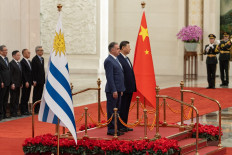
Academia
premium
Beijing beckons as allies recalibrate ties with the US
World leaders are making their trips to China as a kind of response to US President Donald Trump's unfriendly attitudes.
1 month ago
Academia
premium
Monetizing poverty: How algorithms harvest human desperation
Financial inclusion was supposed to be a lifeline; instead, it has become a dragnet. From predatory lending apps to algorithms that harvest "poverty as spectacle," the digital economy is transforming human desperation into a high-growth market.
1 month ago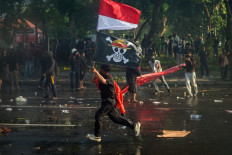
Academia
Prabowo’s war on critics may test Canberra
Indonesia's proposed law against disinformation and foreign propaganda, which suggests cross-border applicability in the ongoing clampdown on government critics, could throw a spanner in the works of its bilateral relationship with Australia.
1 month ago
Academia
Safeguarding nations beyond: Indonesia’s naval transition to blue-water reach
Indonesia's newly announced dynamic resilience doctrine necessitates wider naval reach, but without rigorous planning and fiscal discipline, its blue-water ambitions will remain merely symbolic.
1 month ago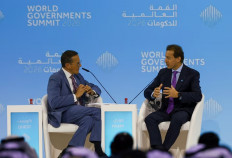
Academia
premium
Beyond Trump's America: Why the world needs NEFOS 2.0
As the era of guaranteed American multilateralism fades, a new global architecture is rising from the spirit of Bandung: NEFOS 2.0—a strategic coalition defined not by ideological alignment, but by collective technological sovereignty and distributed economic power.
1 month ago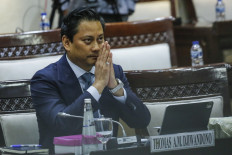
Opinion
premium
Analysis: Nepotism is back in vogue, with a vengeance
The appointment of Thomas Djiwandono, a nephew of President Prabowo Subianto, as deputy governor of Bank Indonesia, has raised the specter of nepotism making a comeback in Indonesian politics.
1 month ago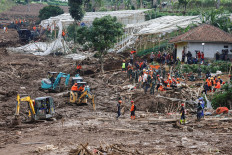
Editorial
premium
Mapping the danger zones
Whether through corruption, a lack of risk assessment or a desire for short-term financial gains, the "danger zones" are wiped off the map until the earth reclaims them.
1 month ago
Academia
premium
Sustainability: Leadership, policy and action to close the capability gap
To turn Indonesia’s natural wealth into resilient prosperity, we must move beyond the vocabulary of net-zero and close the critical gap between ambitious policy and the human capability to execute it.
1 month ago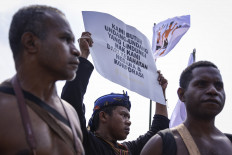
Academia
premium
Why the 4Is of good corporate governance matter
Even though board members are claimed to be independent, they are often friends, associates or well-wishers of the owners and CEOs.
1 month ago
Academia
premium
When education becomes conditional, the impact is suicidal
Social protection and education policies must be integrated to ensure that the most vulnerable do not fall through the cracks and end up being denied their fundamental, constitutionally guaranteed right through systemic exclusion.
1 month ago
Academia
premium
Will democracy govern capitalism, or be consumed by it?
Taxing extreme wealth is not only necessary to prevent 21st-century Caesarism but also essential to saving democracy.
1 month ago
Academia
premium
Why Indonesia need to hear more on Board of Peace justification
That President Prabowo himself felt compelled to personally justify the decision, after it had been made, already tells us what this membership really is.
1 month ago
Academia
premium
When credibility becomes the real fiscal constraint
Indonesia is facing a credibility test. And credibility, once questioned, is costly to rebuild.
1 month ago
Opinion
premium
Analysis: MSCI freezes Indonesia review, raises specter of rating downgrade
Morgan Stanley Capital International (MSCI) has temporarily frozen Indonesia’s February market status review and warned of a potential downgrade from Emerging Market to Frontier Market, citing persistent structural and governance weaknesses in the equity market. Key concerns include opaque ownership structures, limited disclosure of ultimate beneficial owners, and significant price distortions in several heavily weighted stocks, particularly conglomerate- and state-owned enterprise-linked names, which have pushed the Jakarta Composite Index (JCI) higher without corresponding improvements in fundamentals.
1 month ago
Editorial
premium
Pressing for an open society
In recent years, we have seen the civic space shrinking, undermining the quality of democracy. The press can help to stop and reverse the trend.
1 month ago
Academia
premium
Whoosh and weave: Connecting the spaces between
As Indonesia invests in high-speed rail, a quieter revolution in micro-mobility and former rail corridors could shape how growth, jobs and everyday life unfold along Java’s emerging mega-urban corridor.
1 month ago
Academia
premium
From savers to stakeholders: A new social contract for Indonesia
By turning savers into stakeholders, Indonesia is building a market owned by its people, resilient to external shocks, and worthy of the economic sovereignty that Danantara is mandated to protect.
1 month ago
Academia
premium
From GDP to good jobs: Managing AI’s barbell effect
As AI threatens to hollow out the middle of Indonesia's labor market, state policies must pivot from cost-cutting automation toward a human-centered pathway of skill-based hiring and high-value augmentation.
1 month ago
Academia
premium
Universities may be killing their innovators softly
We are witnessing a "soft kill" of university innovators, not by policy, but by a measurement system that renders entrepreneurial labor invisible. It’s time to move toward a differentiated academic career path.
1 month ago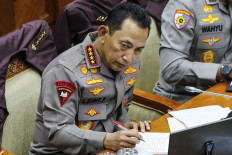
Opinion
premium
Analysis: Police and lawmakers defy calls for sweeping reforms
The National Police appear increasingly emboldened in their bid to consolidate power, as the House of Representatives signals growing support for the force despite persistent public demands for comprehensive reform. Even recent rulings by the Constitutional Court, intended to restrict active-duty officers from holding civilian posts, now seem likely to be circumvented by an unholy alliance of legislative and security interests.
1 month ago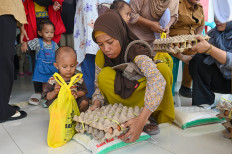
Academia
premium
Why we must guard our hard-won progress against stunting
The government, regional administrations, communities and all other stakeholders must maintain momentum in its fight against stunting as an integral factor in achieving national goals, including Golden Indonesia 2045.
1 month ago
Editorial
premium
Seizing the 'Lisa' moment
Indonesian tourism must move away from a reactive model that only responds to organic virality, such as the "aura farming" trend of the Pacu Jalur longboat races in Riau.
1 month ago
Academia
premium
Kashmir tourism shows resilience and confidence
The renewed momentum was widely viewed as a sign of stabilization after years of disruption.
1 month ago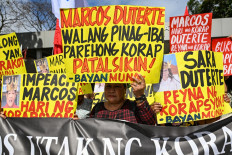
Academia
Politics of hope: Cynicism is not a strategy
In a departure from the past politics of cynicism, Filipinos need one based on hope that comes with concrete policies to address genuine problems in building our nation.
1 month ago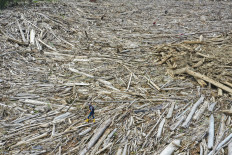
Academia
premium
When disasters test Indonesia's legal and recovery systems
The Sumatra disaster in late November indicates that judicial and law enforcement reform is needed to treat environmental destruction and damage as criminal violations, as well as to create a clear and transparent mechanism for the use of related compensation funds.
1 month ago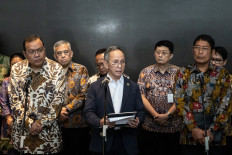
Academia
premium
What new US investment rules mean for Indonesia's capital markets
The MSCI warning is not solely about IDX governance, it is amplified by the broader environment in which US fiduciaries may actively seek exit ramps from emerging market exposure that carries an additional compliance burden.
1 month agoPopular
- Govt mulls lifting deficit cap amid high oil price
- Activists defiant following acid attack on rights defender
- A cowardly attack
- Iran fires missiles at Qatar and Saudi energy facilities
- Before Iran and Venezuela, there was Indonesia
- Strengthening legal certainty in the palm oil industry
- TNI names suspects in acid attack on Kontras activist
- Respect across faiths
- Indonesia puts off ratifying ART as US opens trade probes
- UK, Finland, Netherlands consider joint defence financing, procurement